

Couple reviewing estate planning documents at home
Will and Trust Documents Guide

Content
Content
You've probably heard financial advisors and attorneys emphasize estate planning, but what does that actually mean for your family? It's not just about distributing your grandmother's china or deciding who inherits the beach house. Real estate planning creates a legal framework that protects everything you've built while you're alive and ensures your family isn't left scrambling after you're gone. Most Americans—roughly 67% according to recent surveys—put off creating these crucial documents, often because the terminology sounds confusing or they assume estate planning is only for wealthy people.
What Are Will and Trust Documents?
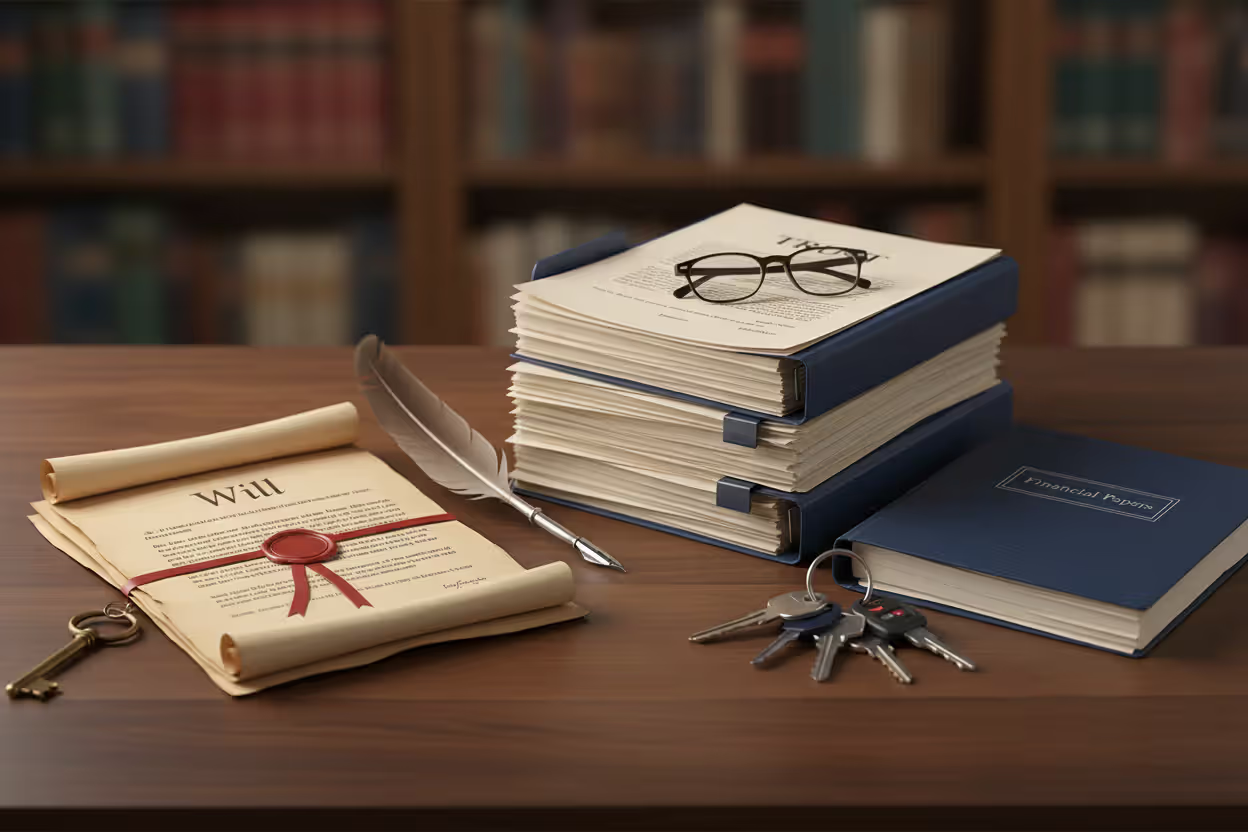
Your last will and testament serves as your final set of instructions. Think of it as a detailed letter explaining exactly what should happen to everything you own after your death. You'll name someone—called an executor—to carry out these wishes. Parents use wills to designate who should raise their children if something happens to both parents. You'll also spell out how to settle outstanding debts and handle final tax obligations.
Here's what catches people off guard: every will must go through probate. That's the court process where a judge confirms your will is legitimate and supervises how your executor distributes your property. Depending on where you live and how complex your finances are, probate might wrap up in six months or drag on for two years. Skip creating a will entirely? Your state's intestacy statutes make these decisions for you, and they're surprisingly rigid—often distributing assets in ways you'd never choose.
Trusts work on completely different mechanics. When you establish a trust, you're creating a separate legal entity. You transfer ownership of your assets—houses, investment accounts, business interests—into this entity. As the grantor (the person who creates it), you appoint a trustee to manage everything according to your specific instructions. The beneficiaries are whoever you've chosen to benefit from these assets.
Author: Rebecca Langford;
Source: harbormall.net
Most people creating estate planning wills and trusts choose what's called a revocable living trust. "Revocable" means you can change your mind—modify terms, add or remove assets, even dissolve the entire thing if circumstances shift. You typically act as your own trustee while you're alive and capable, maintaining complete control. When you die, the person you've named as successor trustee takes over, distributing assets according to your instructions. The game-changer? Properly structured trusts skip probate completely.
Smart estate planning uses both documents strategically. Your trust holds the bulk of your assets, while your will acts as a safety net—catching anything you forgot to transfer, naming children's guardians, and handling items that don't fit neatly into trust structures. Estate attorneys often create what's called a "pour-over will" that sweeps any remaining assets into your trust after death.
Key Differences Between Wills and Trusts
Let's break down how estate planning wills and trusts actually differ in practice, because these distinctions affect both your wallet and your family's privacy.
The probate question matters more than most people realize. Wills must pass through the court system—no exceptions. Your executor files paperwork, notifies creditors, catalogs assets, and waits for judicial approval at multiple stages. In California, this process averages 12-18 months for straightforward estates. Florida? Often shorter. New York? Frequently longer. Trusts that you've funded properly sidestep this entire process. Your successor trustee can begin distributing assets within weeks, not months or years.
Privacy disappears during probate. Court records are public. Nosy neighbors, estranged relatives, or potential scammers can waltz into the courthouse and read your will. They'll discover exactly what you owned, who inherited what, and sometimes even contentious family dynamics spelled out in legal filings. Trusts remain private. Only parties directly involved—your trustees and beneficiaries—typically access trust terms.
Upfront costs versus long-term expenses create an interesting calculation. Attorneys usually charge $300-$1,000 for straightforward wills. Trust preparation runs $1,500-$3,000 for basic versions, potentially exceeding $5,000 for complex situations involving business succession or tax planning. Sounds expensive, right? But consider probate fees. Courts charge filing fees. Executors receive compensation (often 2-4% of estate value). Attorneys bill for probate work. Total probate costs frequently hit 3-7% of your total estate value. A $500,000 estate might pay $15,000-$35,000 in probate expenses—suddenly that $3,000 trust looks like a bargain.
Timing creates practical differences in how these documents function. Your will sits dormant until you die. It's essentially a set of instructions that activate only after death. Trusts spring to life immediately. The moment you sign the documents and transfer assets, your trust exists as a functioning entity. This timing difference becomes critical if you're incapacitated—a stroke, dementia, serious accident. With a funded trust, your successor trustee steps in seamlessly. With only a will? Someone must petition the court for conservatorship, which means lawyers, hearings, ongoing court supervision, and public records.
You control both documents differently while alive. Revocable trusts let you maintain complete authority—you can modify terms whenever you want, add or remove property, or terminate the trust entirely. You can change your will just as easily (assuming you're mentally competent), but those changes only matter after death. Want to shift how assets are managed if you develop Alzheimer's? A trust handles this. A will cannot.
Protection during incapacity reveals perhaps the most significant distinction. Imagine you're in a serious car accident and spend six months in rehabilitation, unable to manage finances. With a funded trust, your successor trustee pays your bills, manages investments, handles property maintenance. Everything continues smoothly. Without a trust, your family faces the conservatorship court process—filing petitions, attending hearings, posting bond, submitting annual accountings to judges. This process can cost $10,000-$15,000 initially, plus ongoing legal and court fees.

Author: Rebecca Langford;
Source: harbormall.net
Essential Paperwork Needed for Estate Planning
Your will and trust paperwork represents the foundation, but comprehensive protection requires several additional documents most people overlook.
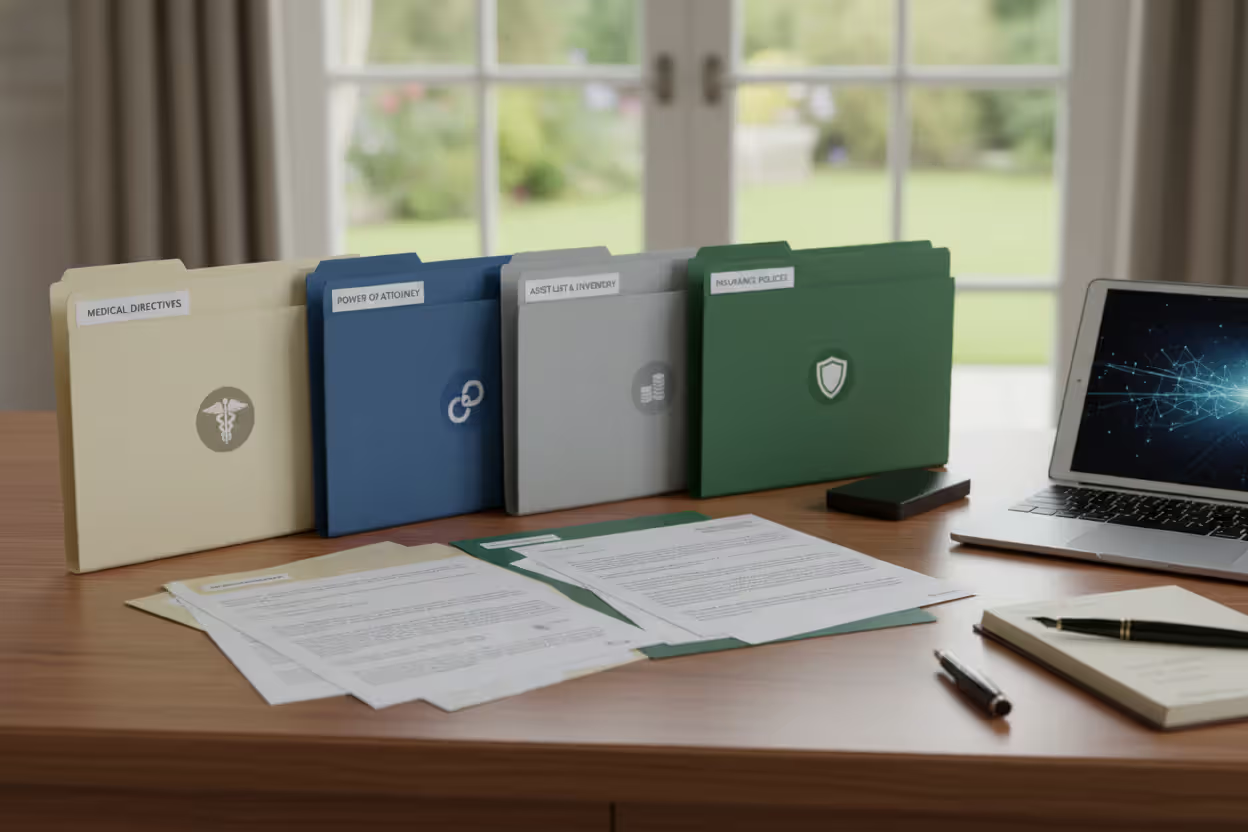
Durable financial power of attorney authorizes someone you trust to handle money matters if you cannot. This person—your "agent" or "attorney-in-fact"—gains authority to access bank accounts, pay monthly bills, manage investment portfolios, sell property if necessary, file tax returns, and deal with government agencies like Social Security or Medicare. "Durable" means the document remains valid even after you become incapacitated (non-durable powers of attorney terminate at incapacity). Choose carefully—you're granting significant financial control. Your responsible daughter who's great with money? Probably a solid choice. Your generous but disorganized brother who's been bankrupt twice? Maybe not.
Medical power of attorney designates your healthcare decision-maker. When you're unconscious after surgery or unable to communicate due to illness, this person speaks for you. They'll discuss treatment options with doctors, decide whether to proceed with recommended surgeries, choose between alternative medications, select rehabilitation facilities, or determine when to transition to hospice care. Some states call this a "healthcare proxy" or combine it with advance directives into a single document.
Living will spells out your preferences for life-sustaining interventions. Would you want to remain on a ventilator indefinitely if doctors say you'll never recover consciousness? Do you want feeding tubes if you can't eat normally? What about CPR if your heart stops—should paramedics resuscitate you under all circumstances, or are there situations where you'd prefer natural death? These decisions torture families when they're forced to guess what you'd want. Document your wishes clearly, and you'll spare loved ones from agonizing choices.
HIPAA authorization might sound bureaucratic, but it's essential. Federal privacy laws prevent doctors and hospitals from discussing your medical condition with anyone—yes, including your spouse and adult children—without explicit written permission. Your healthcare agent might have decision-making authority but still can't access your medical records or speak with your doctors without a HIPAA authorization. Include specific people: your healthcare agent, spouse, adult children, or whoever else should receive medical information during an emergency.
Beneficiary designations on retirement accounts, life insurance policies, and payable-on-death bank accounts override whatever your will says. This surprises people, but it's true. You could write in your will that your entire estate goes to your current spouse, but if your ex-husband is still listed as beneficiary on your $500,000 401(k), he receives that money. Courts consistently rule that beneficiary designations control, regardless of will provisions. Review these annually. Update them after divorces, remarriages, births, deaths, or relationship changes.
Complete asset inventory helps executors and trustees tremendously. Create a detailed list: all bank accounts with institution names and account numbers, investment accounts, retirement plans, life insurance policies with policy numbers, real estate with addresses, vehicles with VINs, business ownership interests, valuable collections, safe deposit boxes with locations and box numbers. Don't include passwords in this document (security risk), but note where to find them. Update this annually when you review your estate plan.
Digital asset instructions address your online life. What happens to your cryptocurrency holdings? Who should manage your online business? Should someone memorialize or delete your Facebook profile? Where are your cloud-stored photos? Who has access to your password manager? Federal law treats digital assets as property, but accessing them after someone's death creates practical challenges without proper authorization and instructions.
Personal letter of instruction provides non-binding guidance about matters that don't fit into legal documents. Explain why you made certain inheritance decisions (this prevents hurt feelings). Describe funeral preferences—burial or cremation, religious services, music selections. Share passwords to devices. Note where you've hidden spare house keys. List people who should be notified about your death. Though not legally enforceable like estate planning wills, these letters help your family tremendously during difficult times.
Author: Rebecca Langford;
Source: harbormall.net
How to Create Will and Trust Documents
Creating estate planning wills starts with taking stock of everything you actually own. Grab a notepad and walk through your finances methodically. List your home (current market value), other real estate like vacation properties or rentals, every bank account, brokerage accounts, your 401(k) and IRA balances, life insurance death benefits, your car, any business ownership, valuable jewelry or artwork, collectibles worth significant money. Total everything up. This exercise serves two purposes: you'll understand your estate's actual value (often more than people expect), and you'll identify what needs addressing in your estate planning documents.
Selecting the right fiduciaries requires more thought than just picking whoever comes to mind first. Your executor manages will provisions and shepherds your estate through probate—they'll need organizational skills, basic financial literacy, availability to handle administrative tasks for potentially 12-18 months, and enough backbone to deal with family disagreements professionally. Trustees handle potentially decades of asset management, requiring similar skills plus investment knowledge if they're managing significant funds.
You can name the same person for both roles or split responsibilities. Your detail-oriented sister might excel as executor but prefer not to manage a trust long-term. Your financially savvy brother might be perfect as trustee. Geographic location mattered more twenty years ago, but online banking and electronic signatures have reduced this concern—though some states still require executors to be residents or post bond if they live elsewhere.
Naming guardians for young children deserves careful consideration and honest conversations. Choose people who genuinely share your parenting philosophy and values. Do they discipline similarly to you? Share your views on education, religion, health? Beyond philosophy, consider practical realities. Are they financially stable enough to raise additional children? Do they have room in their home? Would your kids need to move across the country, leaving friends and schools behind? Some parents split responsibilities—naming one couple as physical guardians but a financially savvy relative as trustee managing inheritance funds. Always name backup guardians in case your first choice can't serve.
Should you hire an attorney or use online services? Honest answer: it depends on your situation's complexity. Online legal document services charge $100-$300 and work reasonably well for straightforward scenarios. You're 28, single, renting an apartment, with $50,000 in savings and a 401(k)? An online will probably suffices. You're 45 with a blended family, own two properties, run a small business, and have $800,000 in various accounts? Pay for an attorney.
Estate planning attorneys bring personalized analysis. They'll identify issues you'd never spot—like your business partnership agreement conflicting with your trust provisions, or your beneficiary designations accidentally triggering inheritance for an ex-spouse. They'll suggest tax strategies, coordinate all documents so nothing contradicts, ensure everything complies with your specific state's requirements, and handle unique circumstances like special needs trusts for disabled beneficiaries. Complex situations justify the $2,000-$5,000 investment.
Proper execution makes or breaks document validity. Different rules apply to different documents, but most states require specific formalities. Wills typically need your signature plus two or three witnesses (your state determines the number) who watch you sign and then add their signatures. Critical rule: witnesses should be "disinterested"—meaning they don't inherit under your will. If your beneficiary witnesses your will, some states automatically void their inheritance. Others allow it but create complications. Just use neutral parties—neighbors, coworkers, random adults who aren't getting anything.
Self-proving affidavits simplify probate. After you and your witnesses sign the will, you all appear before a notary and sign an additional affidavit swearing the will was properly executed. This sworn statement lets courts accept your will without tracking down witnesses years later to testify about watching you sign.
Trust documents require your signature and notarization. Witnesses aren't always mandatory, but notarization proves the signature is genuinely yours. When your trust holds real estate, you'll also need deeds transferring property from your individual name into the trust's name ("Jane Smith, Trustee of the Jane Smith Revocable Trust dated January 15, 2025"). These deeds must be signed, notarized, and recorded at your county recorder's office.
Funding your trust is where most people stumble. Creating beautiful trust documents means absolutely nothing if you don't retitle assets in the trust's name. This requires deliberate action: contact each bank and brokerage firm to change account ownership from your individual name to your trust's name, sign new deeds for real estate, update vehicle titles if appropriate, change business ownership documents. Yes, this takes time—count on spending 4-8 hours over several weeks completing the retitling process.
Unfunded trusts are the leading cause of "my trust didn't work" complaints. You've spent $3,000 creating comprehensive trust documents, but because you never transferred your house and investment accounts into the trust, your family still faces probate on those assets. The trust sits empty, accomplishing nothing. Don't let this happen to you.

Author: Rebecca Langford;
Source: harbormall.net
Common Mistakes When Preparing Estate Planning Documents
Forgotten beneficiary updates create more family drama than almost any other estate planning error. Here's a common scenario: Tom divorces Susan in 2015, marries Jennifer in 2016, and dies in 2024. Tom updated his will to leave everything to Jennifer but never changed the beneficiary on his $600,000 life insurance policy—Susan's name is still there. Jennifer gets nothing from that policy. Susan receives the full $600,000, regardless of what Tom's will says or what his obvious intentions were. Courts consistently enforce beneficiary designations over will provisions.
Review every beneficiary designation annually: life insurance policies, 401(k)s, IRAs, Roth IRAs, brokerage account transfer-on-death designations, bank payable-on-death accounts, HSAs, even your frequent flyer miles (yes, some programs allow beneficiaries). Update immediately after marriages, divorces, births, deaths, or major relationship changes with people you've named.
Empty trusts accomplish exactly nothing. This bears repeating because it's so common and so problematic. Maybe you created your trust five years ago with every intention of funding it but got busy. Perhaps you funded it initially but bought a new house last year and forgot to transfer it into the trust. Maybe you've been adding money to a new brokerage account in your individual name rather than the trust's name.
Whatever the reason, an unfunded trust provides zero benefits. No probate avoidance. No incapacity protection. Your family pays attorney fees and court costs to probate assets that should have been in the trust. The trust just sits there, a expensive paperweight. Schedule time immediately after creating your trust—like, that same week—to begin the retitling process. Make a checklist of every asset and check them off as you transfer each one.
Signature problems invalidate otherwise perfect documents. Your state might require two witnesses for will validity, but you only had one sign. Maybe your witnesses were your daughter and son-in-law, both of whom inherit under the will (disqualified in many states). Perhaps you signed your will but your witnesses never actually saw you do it—they signed later when you brought it to their house. Or you forgot to get your trust notarized.
These technicalities matter enormously. Courts will reject improperly executed documents, leaving your family without the plan you spent time and money creating. Follow execution requirements precisely. When in doubt, ask an attorney to supervise the signing ceremony.
DIY disasters multiply when people download generic forms without understanding their state's specific legal requirements. Estate law varies dramatically between states. Community property states (California, Texas, Arizona, and six others) treat marital assets completely differently than common law states. Some states recognize handwritten wills; others don't. Trust provisions that work perfectly in Florida might create tax nightmares in New Jersey.
Generic online forms can't account for your unique situation. You have a special needs child requiring a special needs trust to preserve government benefits. You own part of a business needing succession planning. You're in a second marriage with children from your first marriage (requiring careful planning to provide for your current spouse while preserving inheritance for your biological children). Your brother struggles with addiction, so leaving him a lump sum inheritance would be disastrous—you need a trust with controlled distributions. Cookie-cutter documents don't address these complexities.
Procrastinating updates after life changes leaves your plan misaligned with reality. That will you drafted when your children were toddlers named your parents as guardians—but your parents are now 80 years old. Your trust made your brother co-trustee, but you haven't spoken to him in five years after a major falling out. You've accumulated $500,000 in new assets since creating your original $300,000 estate plan. You moved from Texas to California, and your documents don't comply with California law.
Major life events requiring document updates include: getting married or divorced, having or adopting children, deaths of named fiduciaries or beneficiaries, significant asset increases or decreases, moving to a new state, major relationship changes with people named in your documents, changes in tax laws affecting your plan, retirement, starting or selling a business, or receiving an inheritance that substantially changes your wealth.
Single points of failure create unnecessary risk. You named your best friend as executor but no alternate—then she died before you. You appointed your oldest daughter as trustee without successors, but she's dealing with serious health issues. You designated your brother as your financial power of attorney, but he's moving to Australia. Always name at least one, preferably two backup options for every fiduciary position.
Tax oversights cost families real money. Federal estate tax currently only affects estates exceeding $13.99 million per individual (2025 amount), so most people don't worry about it. But twelve states plus the District of Columbia impose their own estate or inheritance taxes with much lower thresholds. Massachusetts hits estates over $2 million. Oregon starts at $1 million. Connecticut's threshold is $13.6 million. If you live in or own property in these states, you need tax planning.
Even without estate tax concerns, income tax planning matters. How you designate beneficiaries on retirement accounts dramatically affects their income tax burden. Naming your estate as IRA beneficiary (instead of individual people) accelerates required distributions and tax bills. Poor planning can cost beneficiaries tens of thousands in unnecessary income taxes.
Ignoring digital property leaves executors unable to access increasingly valuable online assets. Your cryptocurrency holdings, online business generating monthly income, professionally valuable LinkedIn network, family photos stored in cloud accounts, purchased digital media (books, movies, music), domain names you've registered—all have value or importance. Without proper authorization and clear instructions, accessing these after your death ranges from difficult to impossible. Include digital asset planning in your overall estate strategy.
Where to Store Your Will and Trust Paperwork
Storing will and trust paperwork effectively balances three competing needs: protection from physical damage, security against theft or tampering, and accessibility when fiduciaries need them urgently.
I've reviewed thousands of estate plans during my career, and here's what keeps me up at night—it's not that people choose the wrong type of trust or miss some exotic tax strategy. It's that they create solid estate planning wills and trusts, put them in a drawer, and forget about them for 15 years. Life happens. Children they named as co-trustees stop speaking to each other. The friend they appointed as executor develops dementia. They accumulate $300,000 in new assets never transferred to their trust. Then they die, and their family discovers an estate plan that made perfect sense in 2010 but creates chaos in 2025. Review your documents every three years minimum—put a recurring reminder in your calendar. And update them immediately after any major life event: marriage, divorce, birth, death, major asset purchase, move to a new state. Your documents should evolve as your life evolves, not stay frozen in time
— Michael Rodriguez
Quality fireproof safes at home work well for many families. Look for safes rated for at least one hour of fire protection at 1700°F (paper burns at 451°F, so you need substantial protection). Water resistance matters too—firefighters spray thousands of gallons fighting house fires. A good safe runs $400-$1,200 but protects documents worth potentially millions. The challenge? If you're the only person who knows the combination and you're suddenly incapacitated or dead, your estate planning documents sit locked in that safe while your family scrambles to access them. Share your combination with your executor, a trusted adult child, or your attorney—write it down and give it to them in a sealed envelope if you're worried about premature access.
Bank safe deposit boxes provide excellent security but create access headaches. Many banks seal safe deposit boxes immediately upon learning the renter has died, refusing access until someone presents court documents appointing them as executor. But getting appointed as executor requires filing your will with the court—which is locked in the safe deposit box. This circular problem delays everything. Some states allow co-renters to access boxes after the other renter's death. Adding your intended executor as co-renter solves the access problem but gives them immediate access to the box right now, which you might not want.
Your attorney's office offers professional storage if your lawyer provides this service. Your documents stay in fireproof storage, properly organized and immediately accessible to your executor when needed. When you die, your executor contacts the attorney, identifies themselves, and receives your original documents quickly. Drawbacks? If your attorney retires, moves, or closes their practice, you'll need to retrieve your documents and make new storage arrangements. Some attorneys charge annual storage fees. And you obviously need to remember which attorney has your documents—write this information down somewhere your executor can find it.

Author: Rebecca Langford;
Source: harbormall.net
Digital copies serve as crucial backups but don't replace originals. Scan all estate planning documents and save PDFs to encrypted cloud storage (like password-protected Dropbox or Google Drive) or encrypted external drives. Multiple backups protect against technology failures. Courts require original wills for probate in most states—copies don't suffice, even notarized copies. But digital versions help your executor understand your plan while tracking down originals. They're also useful if you need to reference your documents when meeting with financial advisors or during estate planning reviews.
State will registries exist in a handful of states. You can file information about your will's existence and location with the state (not the actual will, just information about it). This helps executors locate documents but doesn't replace proper storage of the physical documents themselves. Most states don't offer this service, and even in states that do, few people actually use it.
Access rights vary by document type. Your executor doesn't need your will until you die—in fact, you probably don't want them reading it beforehand. Store it securely but ensure they know where to find it when necessary. Successor trustees need relatively quick access to trust documents since trusts activate during incapacity, not just death. If you're in a serious accident, your successor trustee might need the trust document within days. Agents under financial and medical powers of attorney similarly need prompt access since these documents activate during incapacity.
Create a simple one-page document listing where you've stored each estate planning document and give copies to your executor, successor trustee, and financial power of attorney. Update this sheet whenever you move documents.
Multiple copies of trusts make practical sense. Unlike wills, trusts don't get filed with courts, so the "original" versus "copy" distinction matters less. Provide copies to your successor trustee, adult children who'll eventually benefit, and your financial advisor. They can read them, ask questions, and prepare for their eventual roles. Keep the signed, notarized original in secure storage.
Wills present different considerations. Some states have weird rules where destroying any copy of your will—even a photocopy—creates legal presumption that you intended to revoke your will entirely. Most states don't follow this rule, but why risk it? Maintain one clearly marked original will and perhaps one copy stored separately, but clearly label which is which and be cautious about distributing multiple copies.
Regular storage audits prevent unpleasant surprises. Once yearly, verify: documents remain in the location you think they're in, they're in good physical condition, access information (safe combinations, passwords, attorney contact information) is current, and people who need to know where documents are located still have that information. Five minutes of annual checking prevents hours of frantic searching during emergencies.
Wills vs. Trusts: Side-by-Side Comparison
| Feature | Last Will and Testament | Revocable Living Trust |
| Must go through probate | Yes—court process required in all cases | No—bypasses probate if properly funded |
| Public vs. private | Becomes public record once filed with court | Stays private—only involved parties see it |
| Typical cost for creation | Usually $300-$1,000 with attorney | Typically $1,500-$3,000+, more for complex situations |
| When document activates | Takes effect only after your death | Functions immediately once created and funded |
| Can you change it later | Yes—modify anytime before death if mentally competent | Yes—fully revocable and amendable during your lifetime |
| Provides incapacity protection | No—offers no help if you become incapacitated | Yes—successor trustee manages assets during incapacity |
| Level of court involvement | Extensive—court supervises entire probate process | Little to none—trust administration happens privately |
Frequently Asked Questions About Estate Planning Documents
Will and trust documents create the legal framework that protects everything you've built and everyone you love, but they're most effective as coordinated parts of a comprehensive strategy. That means including powers of attorney for financial and medical decisions, healthcare directives specifying your treatment preferences, beneficiary designations that actually match your current wishes, and clear instructions for handling digital assets. What you need specifically depends on your assets, family complexity, and personal goals—a single 30-year-old needs simpler planning than a 55-year-old with a blended family and a business.
Creating the documents represents just your starting point. Proper execution with required witnesses and notarization, funding your trust by actually transferring assets into it, secure storage that balances protection with accessibility, and regular updates as life changes transform legal paperwork into genuine family protection. Too many people procrastinate, assuming they have plenty of time or their situations aren't complicated enough to warrant formal documents. But incapacity and death rarely announce their arrival in advance.
Start today by listing everything you own and identifying your specific goals. Decide whether your situation suits DIY options or requires professional guidance. Execute documents following your state's technical requirements exactly. Fund any trusts you create—actually retitle those assets. Store everything securely while ensuring the right people can access documents when needed. Set calendar reminders for reviews every three years and updates after major life changes. Taking these concrete steps provides genuine peace of mind—you'll know your wishes will be honored and your loved ones protected, regardless of what life throws at you.
Related Stories

Read more

Read more



The content on this website is provided for general informational and educational purposes only. It is intended to explain concepts related to estate planning, wills, trusts, tax strategies, and financial legacy planning.
All information on this website, including articles, guides, worksheets, and planning examples, is presented for general educational purposes. Estate planning situations may vary depending on personal circumstances, financial structures, legal regulations, and jurisdiction.
This website does not provide legal, financial, or tax advice, and the information presented should not be used as a substitute for consultation with qualified legal, tax, or financial professionals.
The website and its authors are not responsible for any errors or omissions, or for any outcomes resulting from decisions made based on the information provided on this website.