

Couple reviewing estate planning documents at kitchen table
Estate Planning Guide for Beginners

I'll admit it: nobody jumps out of bed excited to plan what happens when they die. It's about as appealing as volunteering for a root canal. But let me share what happened to my neighbor Sarah. Her husband collapsed during a morning jog at 39—massive heart attack, dead before the ambulance arrived. He left behind twin four-year-olds, their home with fifteen years left on the mortgage, and absolutely nothing in writing. Sarah spent the next year fighting her late husband's parents in court. They wanted the kids. The legal bills hit $43,000. She was trying to keep her job, raise grieving toddlers, and battle her former in-laws simultaneously.
Here's what estate planning actually does: it creates instructions for two specific scenarios. First, distributing your stuff after you die. Second, appointing someone to handle your affairs if you're still breathing but can't manage your own decisions. Maybe you only own a twelve-year-old Honda and have $8,000 in your checking account. These documents still matter tremendously. Without them, a judge you've never met decides who gets what and who's in charge.
What Is Estate Planning and Why Does It Matter?

Author: Rebecca Langford;
Source: harbormall.net
When you die or become incapacitated, somebody has to step in. Estate planning determines exactly who that person is and defines their authority precisely. Everything you own becomes your estate: checking accounts, that SUV in your driveway, your house, retirement money, life insurance payouts, your grandmother's engagement ring, Netflix password, and those vintage concert posters in your basement.
Here's where most people screw up: they think estate planning equals writing a will, then they're done. Wrong. Your will represents just one piece. A real plan covers five separate areas. Getting your assets to the people you choose. Appointing guardians to raise your kids if they're still minors. Documenting which medical treatments you'd accept or refuse when you can't communicate. Designating who pays your bills during incapacity. Structuring things to minimize the tax hit on what you leave behind.
There's this persistent belief that only rich people need estate planning. That's garbage for multiple reasons. Maybe you'd want your best friend raising your daughter, not your controlling mother-in-law—but preferences don't mean anything without legal documentation. Perhaps you've lived with your boyfriend for eleven years but never got around to marriage—without explicit paperwork, he inherits exactly nothing when you die.
Skip the planning and your state's intestacy laws take over. These one-size-fits-all rules serve nobody's interests. That boyfriend who's been your partner for a decade? Gets zero. Your cousin who still owes you six grand from 2019? Might suddenly become an heir. The animal shelter where you fostered thirty-seven dogs over the years? Won't receive a penny.
Then probate court enters the scene—this legal process validates your will and supervises how everything gets distributed. Expect twelve to twenty-four months minimum. Court costs and attorney fees typically run between three and seven percent of everything you own. While probate drags on, your family can't touch frozen accounts to cover the electric bill or mortgage payment. I've seen houses fall into foreclosure during probate because nobody could access the dead person's bank account to pay the lender.
Got kids under eighteen? When you haven't named legal guardians through a properly executed will, a family court judge picks who raises them. Your casual conversations about this carry exactly zero legal weight. Only signed, witnessed legal documents matter.
Key Documents in Every Estate Plan
You need five core documents working together. Each handles a specific function, and missing any one creates a gap in your protection.
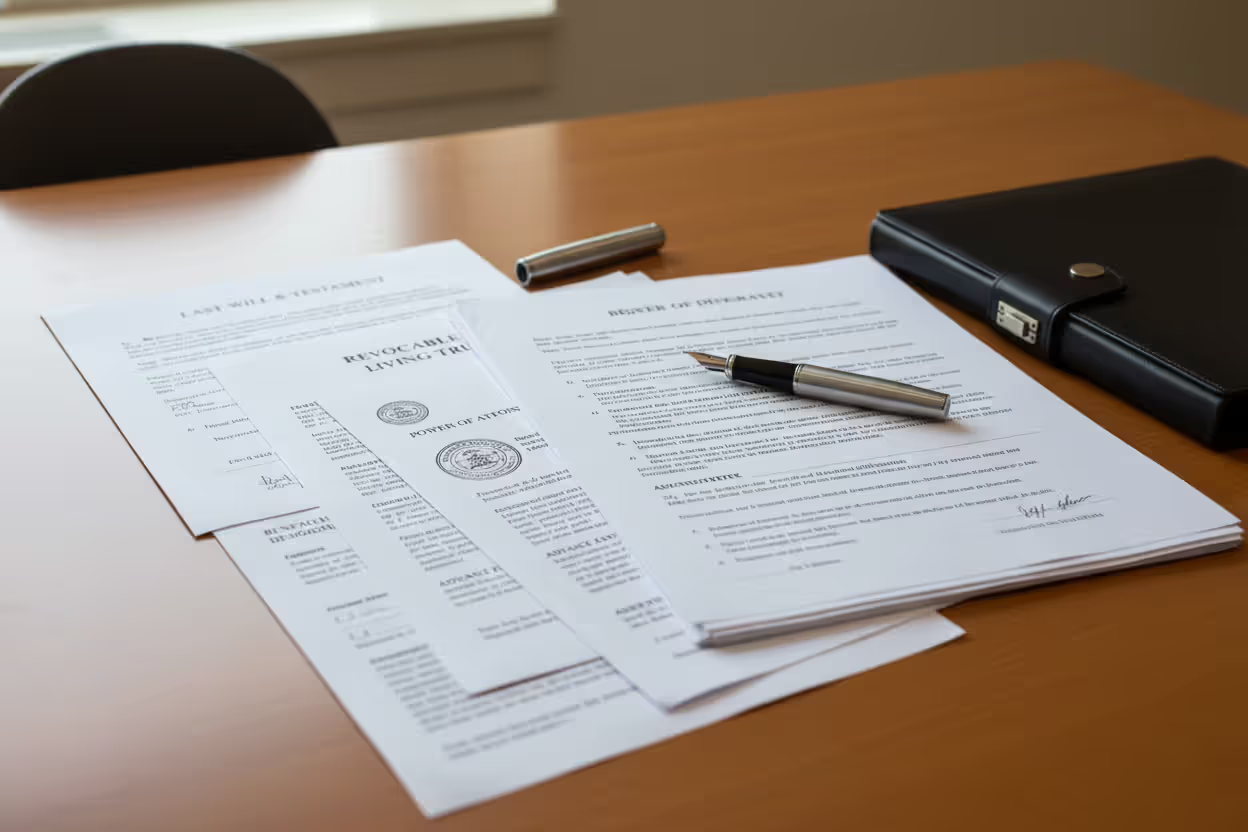
Your last will and testament names your heirs, appoints someone to handle the distribution process (called your executor), and designates guardians for any underage kids. It only becomes effective when you die, and everything controlled by it must go through probate court.
Author: Rebecca Langford;
Source: harbormall.net
A living trust works completely differently—it's a legal structure that owns your assets starting right now, while you're still alive. You keep total control. You can cancel it or change it whenever you want. The advantage appears after your death, when trust assets pass immediately to beneficiaries without touching probate court.
Durable power of attorney names your financial manager. If you're unconscious following a car accident or developing dementia, this person gets authority to handle money matters—covering monthly expenses, managing your investment portfolio, dealing with the IRS, selling property when needed.
Your healthcare directive (some states call it an advance directive or living will) spells out your medical treatment preferences. Do you want cardiopulmonary resuscitation if your heart stops? A breathing machine? Feeding tube? Organ donation? This document tells doctors what you'd choose if you could speak for yourself.
Healthcare power of attorney picks someone to make medical calls you couldn't possibly foresee. Your directive might reject life support, but how do we define life support exactly? Your healthcare agent interprets your values when situations get murky.
Beneficiary designations might be your most powerful documents. The person you list as beneficiary on your retirement account, life insurance, or transfer-on-death bank account gets those assets immediately. Your will has absolutely no authority over these forms. I've seen ex-spouses accidentally collect $420,000 in life insurance because someone forgot to update paperwork after their divorce got finalized.
Wills vs. Trusts: Understanding the Difference
Both distribute your assets to chosen recipients, but through completely different routes.
Wills cost less upfront. Expect to pay $300 to $1,000 for an attorney to prepare yours. The downside? Everything controlled by your will goes through probate, creating extended delays and public records. Anyone curious enough can head to the courthouse and read precisely what you owned and who got what.
Trusts demand bigger initial investment—typically $1,500 to $3,000 for a standard revocable living trust. The payoff? Trust assets skip probate entirely. Your heirs receive distributions within weeks instead of spending months waiting. Everything stays private. Plus trusts let you control distribution timing with precision. You could specify that your nephew gets $50,000 when he turns twenty-five, another $50,000 at thirty, with the balance coming at thirty-five. Or make your daughter's inheritance contingent on finishing her bachelor's degree.
Which approach fits your situation? When you own houses or land in multiple states, trusts eliminate massive complications—otherwise you're facing separate probate proceedings in each state. Blended families usually benefit from trusts to ensure children from previous marriages receive their intended share. If you have dependents with disabilities, you need trusts structured carefully to preserve their government benefit eligibility. Care about privacy? Go with a trust. For simple situations where you don't mind public records, a will might work fine.
Powers of Attorney Explained
Powers of attorney protect you while you're alive, separating them from other estate planning tools.
Without financial power of attorney, a severe stroke or traumatic injury creates an impossible situation. Your family has no access to your accounts. Can't pay your mortgage. Can't file tax returns on your behalf. They'll need to petition the court for conservatorship, costing $5,000 to $15,000 and burning several months.
You've got two main versions. An "immediate" power of attorney starts working the second you sign it. Maximum flexibility, but requires total trust—your appointed agent gets instant access to your finances. A "springing" version lies dormant until you become incapacitated. Sounds safer, but creates real-world headaches: banks often dispute whether you've become "sufficiently incapacitated," creating frustrating delays when your family desperately needs access.
Healthcare power of attorney addresses questions your living will can't anticipate. Sure, your directive refuses life support—but what if three doctors disagree about whether your condition qualifies as terminal? What about an experimental treatment protocol that didn't exist when you wrote your directive? Your healthcare agent makes judgment calls based on truly knowing you, not just reading instructions on paper.
Who Needs an Estate Plan?
Every single person over eighteen needs these documents. Period. But certain groups face particularly urgent risks.
Young adults think they're invincible. Then a 27-year-old gets T-boned by someone running a red light and ends up in ICU for three weeks. Without healthcare power of attorney, his parents couldn't access medical records or approve treatment decisions for their adult son. Being young doesn't exempt you from needing this protection.
New parents face the most pressing deadline. The moment you bring that newborn home, you need guardian designations established. Who raises your kids if both of you die in an accident driving to your six-month checkup? Who manages inherited money until they're adults? Sometimes these should be different people—maybe your sister is amazing with toddlers but has filed bankruptcy twice, while your brother works as a CPA but travels two hundred days per year.

Author: Rebecca Langford;
Source: harbormall.net
Homeowners automatically create probate complications. That house titled only in your name? It freezes the moment you die. Can't sell it, can't refinance it, possibly can't even legally enter it for months. When your spouse needs to relocate for a new job or needs cash from selling the property, they're completely stuck.
Anyone with retirement accounts holding more than ten grand should pull up their beneficiary forms right now. Today. Before you finish reading this. These accounts completely ignore your will, transferring straight to whoever's listed on the beneficiary form. I've seen people who named their mother as beneficiary at age twenty-two, then got married, had three kids, and died at forty-three—their seventy-six-year-old mother inherited the entire $380,000 retirement account instead of the surviving spouse and children.
Business owners risk destroying what they built. Who runs daily operations if you're suddenly in a coma for six weeks? How do you establish the business's value for estate purposes? Without documented succession planning, family battles can obliterate a profitable business within months.
Blended families face unique vulnerabilities. You remarry after your divorce. You die without an estate plan. Your current spouse inherits everything, then later dies leaving it all to their biological kids. Your children from your first marriage get nothing. I've watched this exact scenario create family warfare lasting decades.
Pet owners might not realize animals can't directly inherit money. You need to name a specific caretaker and set aside funds for your pet's future care—either through a pet trust or by leaving money to a trusted person with explicit instructions for your animal's care.
How to Start Your Estate Plan in 5 Steps
Break this project into five concrete actions and it becomes manageable instead of overwhelming.
Step 1: Build a complete inventory of what you own and what you owe. Open a spreadsheet. Write down every bank account with account numbers and current balances. Investment accounts. Retirement savings—401(k)s, traditional IRAs, Roth IRAs, forgotten accounts from jobs you left years ago. Real estate with street addresses and estimated market values. Vehicles. Ownership stakes in any business. Life insurance policies with death benefit amounts. Don't forget digital property—cryptocurrency holdings, valuable domain names, income-producing websites, even social media accounts with commercial value. Then list all debts: remaining mortgage balance, car loans, credit card balances, student loans, money borrowed from family. Your estate has to pay outstanding debts before giving anything to heirs, so this information becomes critical.
Step 2: Choose your beneficiaries and key decision-makers. Decide who gets what. You could keep it simple: "split everything equally among my three kids." Or get specific: "my daughter gets the lake house, my son receives equivalent value from investment accounts." Pick an executor—this person handles the administrative nightmare of closing accounts, paying final bills, filing last tax returns, and distributing assets per your instructions. Choose someone organized and comfortable with bureaucracy, not just someone you like hanging out with. Name backup options in case your first choice dies before you or can't serve. Designate guardians for minor children considering parenting philosophy, financial stability, energy level for raising kids, and where they live—asking someone in Portland to raise kids currently living in Atlanta creates real challenges. Select your financial power of attorney and healthcare power of attorney. These could be the same person or different people depending on their individual strengths.
Step 3: Pick your planning method: DIY, online service, or attorney. For simple situations—you're single with basic assets, or married with all kids from your current marriage—online services like Trust & Will or Nolo cost $100 to $400 and work adequately. For complicated circumstances—blended families, estates exceeding half a million dollars, business ownership, dependents with special needs, advanced tax planning needs—hire an estate planning attorney. Yes, you'll spend $2,000 to $4,000. But fixing DIY mistakes costs far more later.
Step 4: Sign your documents properly and set up secure storage. Whether you use software or an attorney, your state has specific signing requirements. Many states require two witnesses for wills, and beneficiaries can't witness your signature. Powers of attorney usually need notarization. After signing everything correctly, store originals in a fireproof safe or bank safe deposit box. Give copies to your executor, your healthcare agent, and your attorney if you hired one. Tell at least two trustworthy people exactly where originals are stored—you'd be shocked how many perfectly drafted documents disappear because nobody knew their location.
Step 5: Move assets into your trust and double-check all beneficiary forms. Building a trust accomplishes nothing if you don't transfer assets into it. This transfer process—attorneys call it "funding"—means retitling your bank accounts, brokerage accounts, and real estate deeds into the trust's ownership. Your attorney or online service should walk you through this step by step. Then track down beneficiary designation forms for every retirement account, life insurance policy, and transfer-on-death account you've got. Confirm they match your current intentions. This step derails more estate plans than anything else. Don't leave it half-finished.

Author: Rebecca Langford;
Source: harbormall.net
Common Estate Planning Mistakes to Avoid
Even careful planners make these mistakes. Avoid them and you're doing better than most.
Procrastination kills more estate plans than anything else. People delay because it forces thinking about death. They wait for the perfect moment that never comes. Then they die unexpectedly at forty-six, leaving total chaos for their family. There's no ideal time for this uncomfortable work. Just start.
Outdated documents cause confusion equivalent to having no documents. You wrote a will before getting married. Before having kids. Before buying your house. Before your divorce was finalized. That will doesn't match your current life. Commit to reviewing your documents every three to five years minimum. Update immediately after major life events: marriage, divorce, births, deaths, dramatic asset changes, moving to different states (laws vary significantly by state).
Forgetting digital assets creates growing problems. Your estate plan should cover email accounts (they hold important correspondence and financial records), social media profiles (do you want them memorialized or deleted permanently?), cloud photo storage (irreplaceable family photos live there), cryptocurrency wallets (I've seen $82,000 in Bitcoin become permanently inaccessible because nobody had the private keys), and digital businesses (what happens to your Etsy shop or monetized blog?). Keep an updated list of accounts and usernames—store passwords separately in a secure password manager your executor can eventually access.
Conflicting beneficiary designations create disasters. Your will leaves everything to your current spouse. But your ex-wife is still listed on your 401(k) from a previous employer. Guess who gets that $190,000? Your ex-wife. Retirement accounts, life insurance policies, and payable-on-death accounts all bypass your will completely. Review these forms at least once per year.

Author: Rebecca Langford;
Source: harbormall.net
DIY disasters happen when people try saving money on genuinely complicated situations. Handwritten wills might fail your state's witness requirements. Forms downloaded from random websites might contain language from wrong state laws. Minor technical errors invalidate entire documents. Recognize when professional help justifies the cost—generally when you own assets exceeding half a million dollars, have business ownership interests, have children from multiple relationships, or need sophisticated tax minimization.
Not communicating with family creates confusion and hurt feelings after you're gone. You don't have to share every detail, but your executor should know they've been appointed and generally what their job involves. Your healthcare agent needs to understand your core beliefs about medical interventions. When you're leaving unequal amounts to different children, consider explaining your reasoning while you're alive—perhaps one child received $45,000 for graduate school while others didn't, so you're evening out total gifts. Without context, unequal distributions trigger devastating family conflicts.
Estate Planning Costs and Options
What you'll pay depends entirely on your approach and complexity.
| Method | Cost | Time Investment | What It Does Well | Best Fit |
| DIY Software | Free to $100 | Two to four hours | Simple will, basic situations | Single people, minimal assets, no dependents, straightforward wishes |
| Online Legal Services | $100 to $400 | Four to eight hours | Standard wills, basic trusts, powers of attorney | Married couples, typical assets, young families, uncomplicated situations |
| Estate Attorney | $1,500 to $5,000 and up | Four to twelve hours over several weeks | Complex estates, tax strategies, business succession, special needs planning | High net worth, business owners, blended families, complicated dynamics |
Several factors affect final cost. Where you live matters enormously—San Francisco attorneys charge triple what rural Kansas attorneys charge. Estate size drives complexity; once you approach the federal estate tax exemption threshold (currently $13.99 million per person in 2026), you need advanced tax strategies. Family dynamics add layers—blended families, hostile relatives, or dependents with disabilities require detailed custom planning.
Owning a business dramatically increases costs because you need succession planning, professional business valuation, buy-sell agreements backed by life insurance, and operational transition plans. Owning real estate in multiple states means dealing with each state's unique probate rules.
When should you hire an attorney instead of using online services? If you answer yes to any question here, get professional guidance: Do you own part or all of a business? Do your assets exceed one million dollars? Do you have children from different marriages or relationships? Do you want to disinherit someone who would automatically inherit under state law? Do you have a dependent with disabilities who receives government benefits? Do you own property in multiple states? Is your family situation contentious with probable disputes?
For everyone else, online legal services offer a reasonable middle ground. They cost more than pure DIY but less than attorneys, and they walk you through the process using state-specific forms and clear explanations.
Remember this isn't a one-time expense. Documents need periodic updates as circumstances change. Budget $500 to $1,500 for major revisions when situations shift. Some attorneys offer annual review services for $200 to $500 yearly.
The biggest mistake crossing my desk is people waiting until it's too late. Estate planning isn't about death—it's about protecting your family while you're alive. A car accident or sudden illness can strike anyone at any age, and without proper documents, your family faces months of legal battles during an already difficult time
— Michael Chen
Frequently Asked Questions About Estate Planning
Estate planning demands uncomfortable conversations about death, but avoiding these decisions doesn't make them vanish—it just dumps the burden on your grieving family when they're emotionally devastated and least capable of handling complexity. The documents you create now provide clarity during emotional chaos, prevent battles when everyone's stressed and exhausted, and guarantee your actual wishes get respected.
Start with three foundation steps: draft a will, establish healthcare and financial powers of attorney, and verify every beneficiary designation on your accounts. Just finishing these three actions puts you ahead of the 68% of Americans who've done absolutely nothing.
As your circumstances change—through marriage, kids, career growth, divorce, starting a business, or becoming responsible for aging parents—revisit and expand your plan. What protects a twenty-nine-year-old single professional won't serve a forty-nine-year-old with four teenagers, a thriving business, and elderly parents depending on them.
The peace you'll feel knowing your family is protected far outweighs any discomfort in creating these plans. Your loved ones will never regret that you handled this responsibility. But they might struggle for years with the preventable disaster you left behind if you don't.
Related Stories

Read more

Read more




The content on this website is provided for general informational and educational purposes only. It is intended to explain concepts related to estate planning, wills, trusts, tax strategies, and financial legacy planning.
All information on this website, including articles, guides, worksheets, and planning examples, is presented for general educational purposes. Estate planning situations may vary depending on personal circumstances, financial structures, legal regulations, and jurisdiction.
This website does not provide legal, financial, or tax advice, and the information presented should not be used as a substitute for consultation with qualified legal, tax, or financial professionals.
The website and its authors are not responsible for any errors or omissions, or for any outcomes resulting from decisions made based on the information provided on this website.