

Couple reviewing estate planning documents with an attorney
When to Start Estate Planning for Your Future

Here's what usually happens: Someone turns 45, attends a friend's funeral, and suddenly panics about not having a will. Or a couple has their first baby and realizes—three months later—they still haven't named a guardian. Maybe you inherit $80,000 from an aunt and think "I should probably do something about this," then promptly forget for two years.
Sound familiar? Most people treat estate planning like a distant obligation—something filed under "Important But Not Urgent" until it becomes very urgent, very fast.
The real question isn't whether estate planning matters (it does). It's figuring out when your life has gotten complicated enough to demand it, and what specific changes should send you running to an attorney's office.
Why Estate Planning Isn't Just for the Elderly
Let me guess—you picture estate planning as something wealthy retirees worry about while sipping scotch in mahogany-paneled offices. Wrong.
Here's reality: A 29-year-old with $15,000 in savings, a leased Honda, and zero dependents barely needs estate planning. Fast-forward three years. Same person, now 32, just married someone with student debt, bought a condo with both names on the mortgage, and welcomed a daughter. Without any plan whatsoever, if both parents die in a car accident, the state decides who raises their child. Their condo ownership gets tangled in probate court. Nobody can access their modest bank accounts to pay the mortgage while lawyers sort things out.
Age matters way less than your actual situation. When should you start estate planning depends entirely on who relies on you and what you've accumulated.
Courts operate on documentation, not good intentions. Your mom knows you'd want your sister to raise your kids, but unless you've put that in writing with proper legal language, a judge decides based on whoever petitions first. State intestacy laws follow rigid formulas that probably don't match what you'd choose.
Younger people constantly overlook assets they already have. That 401(k) from your last two jobs? It needs a beneficiary. Your $250,000 life insurance policy through work? Without a designated person to receive it, that money sits in probate for months. You're already doing estate planning whether you realize it or not—the question is whether you're doing it intentionally or letting default settings control your legacy.

Author: Caroline Ellsworth;
Source: harbormall.net
Key Life Events That Trigger the Need for Estate Planning
Certain life moments should trigger an immediate call to an estate attorney. These transitions fundamentally alter your legal status, financial picture, or family structure in ways that absolutely require documentation.
Marriage and Divorce
Getting married doesn't automatically update your beneficiaries—that's on you. Your 401(k) might still list your parents from when you set it up at 23. Meanwhile, your new spouse assumes they'll inherit those funds. This creates preventable disasters.
Within 30 days of marriage, newlyweds should tackle beneficiary updates across every single account, draft or revise wills, and have serious conversations about trust structures. Got children from a previous marriage? The complexity just tripled. You're now balancing your new spouse's financial security against inheritance your kids from your first marriage expect.
Divorce requires ruthless document hunting. I've seen countless cases where someone forgets about a $150,000 life insurance policy still naming their ex-spouse. Some states automatically void provisions for ex-spouses in wills; others don't touch them. Check your state's laws and update everything manually. That includes transfer-on-death deeds, retirement accounts, POD bank accounts, and any jointly titled property that needs retitling.
Having Children or Grandchildren
Nothing—and I mean nothing—makes estate planning more urgent than becoming a parent. You must designate guardians for minor children. Skip this step, and if both parents die, a family court judge who's never met your family decides who raises your kids. That judge might select someone you'd never approve of, or even place children temporarily in foster care while relatives battle for custody.
Here's what most parents miss: leaving money directly to minors creates chaos. Children can't legally control property until they hit 18 (or 21, depending on your state). A 16-year-old can't sign papers to sell inherited property or manage investments. Trusts solve this by appointing someone to manage money for education, healthcare, and living expenses, then distributing remaining assets when your child reaches whatever age you specify—25, 30, or older if you prefer.
Grandparents entering the picture often want to fund 529 plans or create trusts for grandchildren. Coordinate these plans with the parents first. I've seen well-meaning grandparents accidentally complicate financial aid eligibility or create tax headaches because they didn't loop in the parents before establishing accounts.

Author: Caroline Ellsworth;
Source: harbormall.net
Buying Property or Starting a Business
Real estate cranks up estate complexity fast. Own property in multiple states? You're looking at probate proceedings in each state unless you've established a trust. Co-owned property creates another layer—joint tenancy with survivorship rights works completely differently than tenancy in common. Get the titling wrong, and you've created a legal nightmare for whoever survives you.
Starting a business without succession planning is asking for trouble. When you die, your business might be forced into liquidation at fire-sale prices, destroying decades of value-building. You need buy-sell agreements that specify exactly what happens to your ownership stake, operating agreements with clear succession provisions, and instructions about management if you're incapacitated but not dead.
Business owners face a crucial decision: Should the business get sold to fund other bequests, or stay in the family? This choice demands sophisticated planning to minimize tax hits and ensure smooth ownership transitions. Nobody wants their life's work sold for pennies on the dollar because their estate needed quick cash to pay other beneficiaries.

Author: Caroline Ellsworth;
Source: harbormall.net
Receiving an Inheritance or Major Assets
Inheriting substantial money changes everything overnight. That $400,000 inheritance from your father might push your total estate value above federal or state tax exemption thresholds, requiring completely different planning strategies.
Large inheritances raise difficult questions about eventual distribution. Do you want to preserve your grandfather's lake cabin for your own children? Should inherited funds remain separate from marital property? These aren't decisions you make once—they require ongoing documentation updates.
Sudden wealth from any source—selling a company, exercising stock options worth $2 million, legal settlements—creates immediate planning requirements. Without proper structures, you're exposed to creditors, potential lawsuits, and terrible tax consequences that could've been avoided with advance planning.
Health Changes or Diagnosis
Serious illness makes estate planning extremely time-sensitive. While you're still legally competent, you need healthcare directives, durable powers of attorney for finances, and potentially living wills specifying end-of-life care preferences. These documents ensure someone can actually make medical and financial decisions if you can't communicate.
Terminal diagnoses require accelerated planning on multiple fronts. Beyond just distributing assets, you're planning for potential long-term care costs, protecting your spouse from financial devastation, and documenting exactly what types of life-prolonging measures you want or refuse.
Even minor health scares—that moment in the ER when you think "this could've been serious"—should prompt action. That wake-up call when you realize you're mortal? That's precisely when you should document everything while you're still healthy enough to make clear decisions.
What Age Should You Start Estate Planning
Life events trump age, but certain age ranges align with typical planning needs and priorities.
Eighteen marks legal adulthood—you can sign contracts and make healthcare decisions. Technically, this is when to start estate planning, though most 18-year-olds own almost nothing. Still, college students need healthcare directives and financial powers of attorney. Without these, parents have zero legal authority over their adult children during medical emergencies. I've seen parents unable to access their 19-year-old's medical records after a serious accident because they lacked proper documentation.
Most people should seriously address estate planning between 25 and 35. By now, you've probably accumulated some retirement savings, might be carrying student debt, and could be getting married or having children. Basic planning at this stage means creating a will, healthcare directive, financial power of attorney, and designating beneficiaries on absolutely every account.
Your 30s and 40s bring complexity. You're building retirement accounts worth $100,000+, buying property, raising children, and building career equity. Trusts become relevant. Guardianship designations become critical. Life insurance planning intensifies because people actually depend on your income.
In your 50s and 60s, planning shifts toward preserving wealth and minimizing taxes. You're strategizing retirement income, contemplating long-term care possibilities, and thinking about legacy. This is also when people update plans to reflect changed relationships—adult children who've demonstrated financial responsibility (or recklessness), new grandchildren, divorces, or remarriages that weren't on the radar 20 years ago.
Waiting until retirement to start planning means you've missed decades of opportunities. You've lost years of potential asset protection, tax minimization, and family security. Worse, health problems or sudden incapacity might strike before you've written down your wishes.
| Life Stage | Age Range | Essential Documents | Important Actions | Assets Worth Protecting |
| Young Adult | 18-29 | Healthcare directive, durable financial power of attorney, simple will | Name beneficiaries on every account; get term life insurance if anyone depends on your income | Checking/savings accounts, vehicle, personal belongings, student loan obligations (protecting any cosigners) |
| Starting Families | 30-39 | Will naming child guardians, revocable living trust (if assets exceed $200K), adequate life insurance | Select guardians for minor children; create trusts controlling how children receive inheritance; update all beneficiaries after marriages/births | House, retirement accounts growing toward $100K+, life insurance, emergency savings |
| Peak Earning Years | 40-54 | Updated trusts, business succession documents (if you own a business), initial long-term care considerations | Audit all beneficiaries; explore irrevocable trusts for tax strategies; align plans with business partners | Multiple properties, retirement accounts worth $300K+, business ownership stakes, diversified investment portfolios |
| Pre-Retirement | 55-64 | Complete estate plan review, healthcare proxy, HIPAA medical authorization forms | Maximize final years of retirement contributions; evaluate Roth conversion opportunities; update documents to reflect current relationships, not decades-old assumptions | Peak career assets, vacation properties, valuable collections or art, retirement accounts approaching $500K-$1M+ |
| Retirement Years | 65+ | All documents refreshed to current laws, detailed long-term care directives, charitable giving structures | Strategize required minimum distributions; implement charitable giving if desired; simplify estate by gifting or consolidating accounts | Social Security benefits, pension income, Medicare planning, inherited retirement accounts, family heirlooms with sentimental value |
Signs You've Waited Too Long to Begin
Specific warning signs scream that you're overdue for estate planning, regardless of how old you are. Recognizing these red flags should trigger immediate action.
You have minor children but haven't legally named guardians. You're gambling with their entire future. Courts don't automatically give custody to family members you'd prefer. They decide based on their judgment of the child's best interests, which genuinely might not match yours.
You've accumulated accounts without beneficiary designations. Each bank account, retirement plan, life insurance policy, and brokerage account needs a current, legally valid beneficiary on file. These designations transfer assets directly outside of probate—but only if you've actually completed them.
You own a business without any succession plan. Your death or incapacity puts both your family and business partners in terrible positions. Worst case: your business gets sold in a forced sale, destroying value and leaving your family with a fraction of what the business is actually worth.
You've remarried but never updated your estate plan. This creates almost guaranteed conflict between your current spouse and children from previous marriages. Outdated documents might still name your ex-spouse as beneficiary or personal representative, creating absolute legal chaos.
You're relying exclusively on joint ownership as your planning strategy. Joint accounts do avoid probate—that's true. But they don't address tax planning, protection from creditors, or what happens when both owners die simultaneously (say, in a car accident). Joint ownership also creates immediate problems if one owner becomes incapacitated but not deceased.
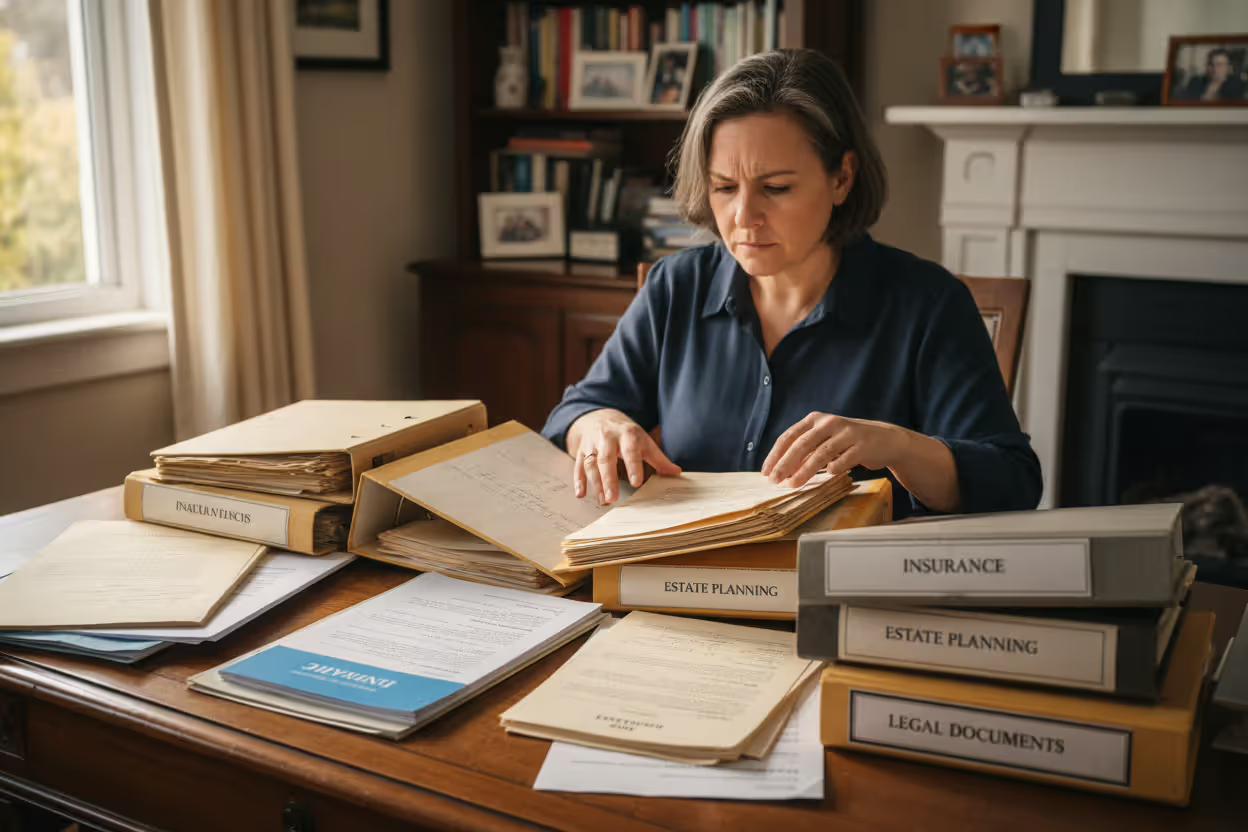
You have significant assets titled only in your name, with zero trust structures or transfer-on-death provisions. This guarantees your estate goes through probate court—a public process that can consume 6-18 months and drain substantial assets in legal fees and court costs.
Author: Caroline Ellsworth;
Source: harbormall.net
How Estate Planning Needs Change Over Time
Your estate plan shouldn't be static—it's a living framework that evolves with your life circumstances. Understanding how needs change over decades helps you stay current.
During your 20s and early 30s, focus on fundamentals: who makes decisions if you're incapacitated, where your modest assets should go, and who raises your children if applicable. Simple wills and powers of attorney usually cover these basics. The goal is making sure someone can access your accounts and make healthcare decisions during emergencies.
Entering your late 30s and throughout your 40s, complexity multiplies. You're accumulating actual wealth, your children are growing through different stages, and you might be managing aging parents while advancing your career. Revocable living trusts become valuable—they skip probate, maintain privacy, and enable sophisticated distribution strategies. You might establish educational trusts for children or special needs trusts for family members with disabilities.
Your 50s emphasize wealth preservation and tax strategy. You're calculating retirement income needs, evaluating potential long-term care expenses, and maximizing what passes to the next generation. Irrevocable trusts, charitable giving strategies, and life insurance trusts might make sense now. You're also reassessing which adult children are actually responsible enough to serve as executors or trustees—not always an easy conversation.
During retirement, estate planning emphasizes legacy creation and healthcare decisions. You're managing required minimum distributions from retirement accounts, possibly downsizing from larger properties, and finalizing decisions about charitable contributions. Healthcare directives become increasingly important as medical decisions grow more complex and consequent.
Each decade requires reviewing and updating documents. A plan you created at 30 won't serve you at 50 without significant revisions. Marriages, divorces, births, deaths, relocations across state lines, and major changes in net worth all necessitate updates.
First Steps to Take When You're Ready to Start
Starting estate planning feels overwhelming, but concrete steps make the process manageable. Here's your action plan:
Inventory everything you own. List all assets: bank accounts with current balances, retirement plans, life insurance policies with face values, real estate, vehicles, business interests, and valuable personal property. Include account numbers and approximate values. Don't overlook digital assets like cryptocurrency, online businesses, or domain names worth money.
Document your debts. Student loans, mortgages, credit cards, car loans, and business debts all impact your estate. Some obligations disappear when you die, others must be satisfied from your estate before any distribution, and some (like federal student loans) get forgiven. Understanding your complete debt picture enables accurate planning.
Select your fiduciaries. Decide who should serve as will executor, trust trustee, guardian for minor children, healthcare agent, and financial power of attorney. These roles demand trustworthiness, organizational ability, and willingness to serve. Identify backup choices for each role in case your first choice can't or won't serve.
Determine beneficiaries. Figure out who inherits what, with specific percentages. Name contingent beneficiaries—who inherits if your first choice dies before you do. Think through whether you want equal distribution among children or adjusted amounts based on individual needs or circumstances.
Collect existing paperwork. Gather any wills, trusts, powers of attorney, or beneficiary designations you've previously created. Also collect marriage certificates, divorce decrees with property settlements, birth certificates, property deeds, and business formation documents.
Hire an estate planning attorney. Simple estates might work with online tools, but most situations benefit enormously from professional guidance. Attorneys ensure your documents comply with your specific state's laws, spot planning opportunities you'll miss, and help you avoid expensive mistakes. Budget $1,500 to $3,500 for comprehensive estate planning, more for complex situations involving businesses or multiple properties.
Update every beneficiary designation. After creating your plan, audit every single account and policy to ensure beneficiaries match your new estate plan. This step is absolutely critical—beneficiary designations override your will's instructions.
Secure documents and inform people. Store original documents in a fireproof home safe or bank safe deposit box. Provide copies to your executor and attorney. Confirm your family knows the documents' location and who to contact.
Schedule reviews. Set calendar reminders to review your estate plan every three to five years minimum, or immediately after major life events. Laws evolve, relationships change, and asset values fluctuate—your plan should keep current pace.
The single biggest mistake I encounter is people postponing estate planning until the 'right time' arrives. There's no perfect moment, but countless imperfect moments become absolute tragedies without proper planning. I've watched families completely torn apart by entirely preventable conflicts and observed estates demolished by easily avoidable taxes. Start with something—even just a basic will—then build complexity as needed. You know that saying about planting trees? Twenty years ago would've been ideal; today is the next best option. Estate planning follows identical logic
— Margaret Chen
Frequently Asked Questions About Estate Planning Timing
Estate planning has nothing to do with being old or rich—it's about protecting the people and things that matter to you. Whether you're 25 with your first real job or 55 with complicated finances, the right time to start is before you actually need it.
Life changes like getting married, having children, buying property, or launching a business create immediate planning requirements. Waiting until you're older or wealthier leaves your family vulnerable during absolutely critical years. The smartest approach is starting with basic documents appropriate to your current situation, then expanding your plan as your life gets more complex.
Take your first step today: list your assets, choose your decision-makers, and schedule a consultation with an estate planning attorney. Your future self—and the people you love—will appreciate the foresight you demonstrated by planning ahead.
Related Stories

Read more

Read more




The content on this website is provided for general informational and educational purposes only. It is intended to explain concepts related to estate planning, wills, trusts, tax strategies, and financial legacy planning.
All information on this website, including articles, guides, worksheets, and planning examples, is presented for general educational purposes. Estate planning situations may vary depending on personal circumstances, financial structures, legal regulations, and jurisdiction.
This website does not provide legal, financial, or tax advice, and the information presented should not be used as a substitute for consultation with qualified legal, tax, or financial professionals.
The website and its authors are not responsible for any errors or omissions, or for any outcomes resulting from decisions made based on the information provided on this website.