

Person reviewing estate planning documents at home office desk
How to Do Estate Planning Yourself Without a Lawyer

Most people assume you need a lawyer to create an estate plan. That's not true. If your financial picture is relatively simple—say you're under 40 with modest savings, or you're retired with straightforward wishes about who gets what—you can probably handle this yourself and pocket the $2,000-$5,000 you'd otherwise spend on legal fees.
The challenge? Figuring out whether your situation truly is simple enough for the DIY approach, then executing everything correctly so your documents actually work when your family needs them.
Let me walk you through exactly how to create a legally valid estate plan on your own, plus the red flags that mean you should stop and call an attorney instead.
When DIY Estate Planning Makes Sense
Whether you can do my own estate planning isn't a yes-or-no question—it depends entirely on what you own and who's in your life.

Author: Caroline Ellsworth;
Source: harbormall.net
You're probably fine handling estate planning DIY if you're:
In your twenties or thirties without kids. At this stage, you mainly need someone authorized to make medical decisions if you're in an accident, plus a basic will naming who inherits your stuff. Nothing complicated yet.
Planning to split everything equally among your children, or leave it all to your spouse. Straightforward distribution = straightforward planning. No attorney required.
Worth less than $13.99 million. That's the 2026 federal estate tax threshold. Stay under that number and you won't trigger tax complications that demand professional expertise.
In your first marriage with children from that marriage only. I'll be blunt: second marriages with his-kids-and-her-kids situations get messy fast. But traditional family structures? Much simpler.
Renting, or owning just your primary residence. Once you start collecting rental properties or vacation homes across state lines, you're adding complexity that often justifies paying for legal help.
Red flags that estate planning DIY isn't the right move:
You run a business (even a side business bringing in substantial income). You have kids from multiple relationships. Your estate might owe state or federal estate taxes. You need to create a special needs trust for a disabled family member. You're worried about creditors or lawsuits. These scenarios introduce legal landmines where one mistake costs your family far more than an attorney's fee.
Essential Documents You Need for Your Estate Plan
Four core documents form the foundation of any DIY estate planning package. Skip one and you've left gaps that cause problems later.
Wills and Living Trusts
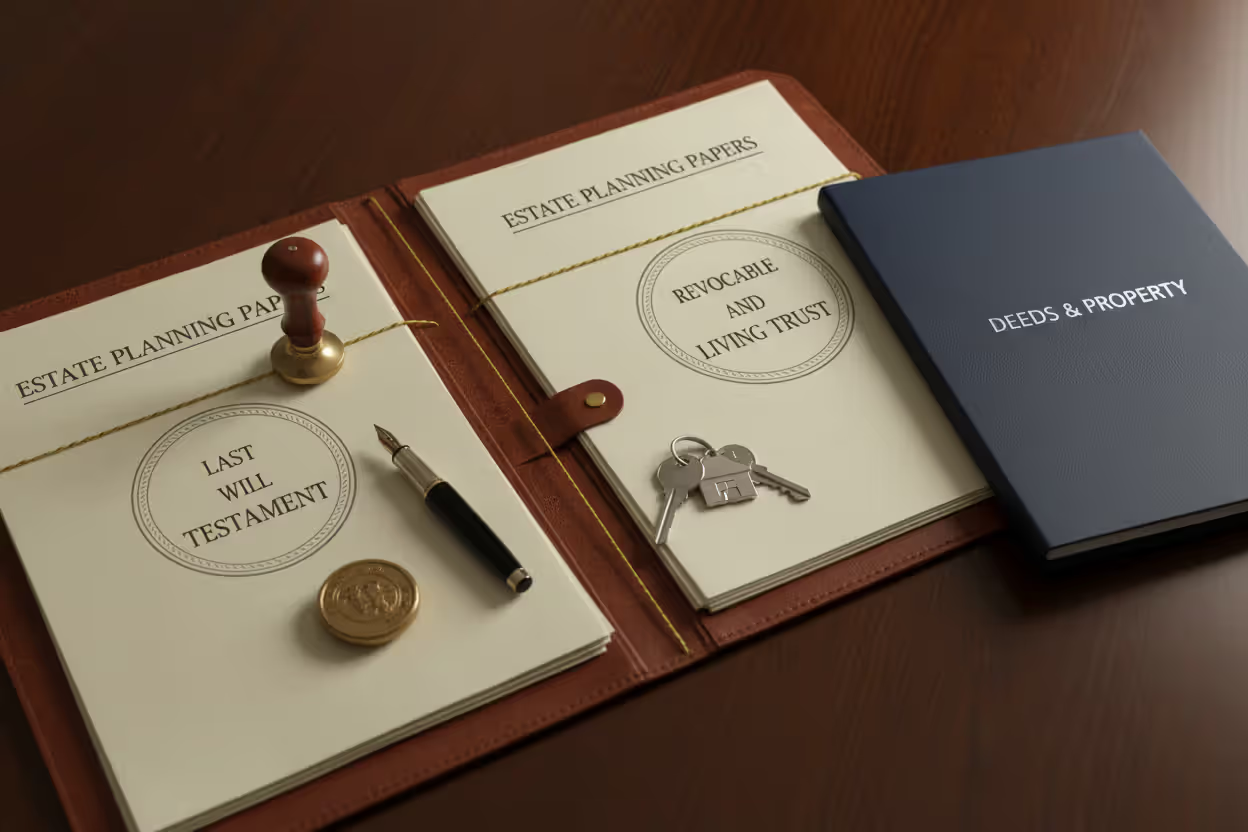
Your last will and testament tells everyone who gets your belongings after you die and names guardians for minor children. Courts use a process called probate to verify your will is legitimate and supervise distribution of your assets—this typically takes six months to a year and becomes public record.
Every will needs these elements: an executor (the person managing your estate), beneficiaries with clear instructions about what they receive, guardian designations if you have minor children, and a "residuary clause" that covers anything you forgot to specifically mention.
Living trusts provide a different approach. You establish the trust while alive, transfer ownership of your assets into it, serve as trustee yourself, then name someone to take over as trustee after you die. Assets held in the trust skip probate entirely and go straight to your beneficiaries.
Author: Caroline Ellsworth;
Source: harbormall.net
For most people tackling how to do estate planning yourself, a simple will gets the job done. Living trusts shine in specific circumstances: you own real estate in multiple states, you value privacy (remember, probate is public), or you want to spare your family the 6-18 month probate wait.
Power of Attorney Forms
A financial power of attorney authorizes someone to handle your money and property if you can't do it yourself. Without this in place, your family has to go to court and request conservatorship—a process that's expensive, slow, and strips away your autonomy.
You'll pick between two versions: a "springing" POA that only activates if you're declared incapacitated, or a "durable" POA that works immediately and continues working if you become incapacitated. Most estate planners push clients toward durable POAs because proving incapacity to activate a springing POA creates unnecessary hurdles.
Choosing your agent matters enormously. This person gets broad control over your bank accounts, investments, and property. Pick someone you trust completely, who's good with money, and who's willing to serve. Always name a backup in case your first choice dies, declines, or can't serve for other reasons.
Healthcare Directives
Healthcare directives do two things: they designate a healthcare proxy (someone making medical decisions when you can't) and document your preferences for end-of-life care (living will).
Your healthcare proxy needs more than medical knowledge—they need the courage to enforce your wishes even when other family members disagree or doctors push back. They might face heart-wrenching decisions about life support, organ donation, and hospice care.
The living will section gets specific about scenarios: if your heart stops, do you want CPR? If you can't swallow, do you want a feeding tube? If you can't breathe independently, do you want a ventilator? Spelling this out removes guesswork during crisis moments.
If you're dealing with a serious illness, ask your doctor about POLST forms (Physician Orders for Life-Sustaining Treatment). These medical orders follow you between hospitals and care facilities, ensuring emergency responders immediately honor your preferences.
Step-by-Step Process for Creating Your Own Estate Plan
Here's the actionable walkthrough for how to do estate planning yourself from start to finish.
Step 1: Catalog everything you own and owe
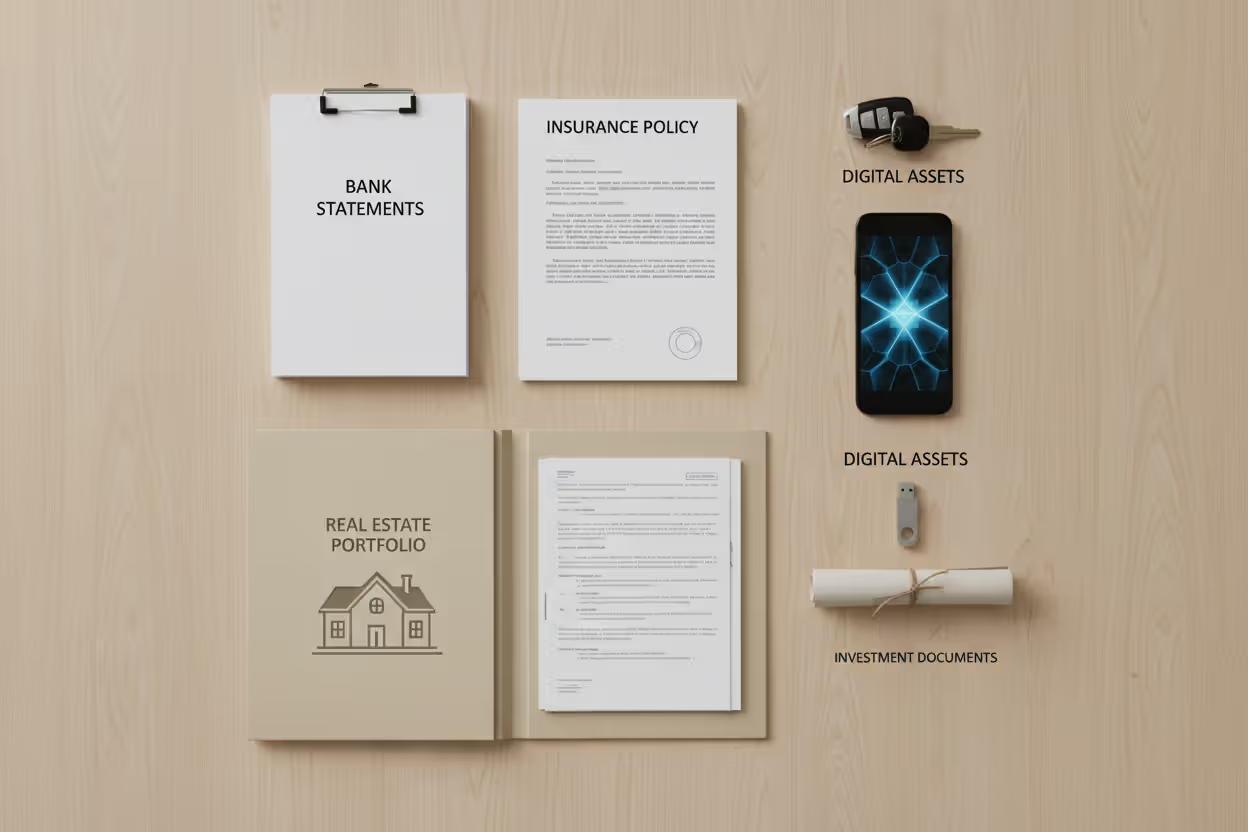
Make a comprehensive list: checking and savings accounts, brokerage accounts, retirement accounts (401(k)s, IRAs, Roth accounts), your home and any other property, vehicles, business interests, life insurance policies, valuable items like jewelry or art, and digital property (crypto, domain names, online accounts with monetary value).
Pay attention to how each asset is titled. Anything held as "joint tenancy with right of survivorship" automatically transfers to your co-owner when you die. Assets with named beneficiaries—retirement accounts, life insurance—bypass your will completely. Only property titled solely in your name is controlled by your will.
Author: Caroline Ellsworth;
Source: harbormall.net
List your debts too: mortgage balance, car loans, credit card debt, student loans, personal loans. Your estate pays these before distributing anything to heirs.
Step 2: Decide who inherits what
This is where easy estate planning turns personal. You can make specific gifts ("my sister gets my piano") or divide everything by percentages ("split my estate equally among my four nieces").
Think about backup beneficiaries—if your primary beneficiary dies before you do, where should their share go? Without naming contingent beneficiaries, that portion just falls into your general estate and gets divided according to your residuary clause.
For retirement accounts and life insurance, contact those companies directly to update beneficiary forms. These supersede whatever your will says, so if your ex-spouse is still listed, they get the money regardless of what your will says.
Step 3: Appoint people to key roles
Your executor (or successor trustee if you're using a trust) locates assets, pays outstanding debts and taxes, and distributes property according to your instructions. Choose someone detail-oriented, trustworthy, and willing to handle months of paperwork and phone calls.
If you have minor children, name guardians—someone to raise them and someone to manage money they inherit. These can be the same person, but you might prefer separating the roles if the best parent-figure you know isn't great with finances.
Choose your financial POA agent and healthcare proxy. Different skills matter for each role: financial savvy for your POA, emotional strength and medical judgment for your healthcare proxy.
Step 4: Create your documents
Use one of the platforms I'll discuss in the next section, or download forms directly from your state bar association's website. Free forms exist, though paid services typically provide better guidance and ensure state-specific compliance.
Be precise with your language. "Divide my estate fairly among my kids" invites disputes. "Divide my estate equally among my three children, Sarah Johnson, Michael Johnson, and Emily Johnson, in equal one-third shares" leaves no room for argument.
Consider including a no-contest clause if you anticipate family drama. This provision disinherits anyone who challenges your will in court, which discourages frivolous lawsuits.
Step 5: Sign everything correctly
Each state has particular rules, but typical requirements include:
- Your signature as the person creating the document
- Two witnesses (who aren't receiving anything in your will) who watch you sign
- Notarization for certain documents (always for POAs, sometimes for healthcare directives)
Most states don't require notarization for wills themselves, but adding a notarized "self-proving affidavit" signed by your witnesses makes probate smoother later because the court won't need to track down witnesses years from now.
Never sign documents you haven't read completely. Never let witnesses sign before they've watched you sign first. These mistakes invalidate documents.
Step 6: Store everything securely but accessibly
Keep original documents in a fireproof safe at home or a bank safe deposit box. Tell your executor exactly where they're stored—a hidden will helps no one.
Distribute copies (never originals) to your executor, healthcare proxy, and POA agent. Give a copy of your healthcare directive to your primary care doctor for your medical file.
Save digital copies in encrypted cloud storage, with access instructions stored in a password manager your executor can access.
DIY Estate Planning Tools and Resources
Several platforms now specialize in do it yourself estate planning. Here's what you need to know about popular choices:
| Service | Price Range | What You Get | Where It Works | Ideal User | Watch Out For |
| Trust & Will | $199-$599 | Will, trust options, powers of attorney, healthcare directives | Available nationwide | Anyone wanting comprehensive coverage including trust capability | You're on your own—no attorney reviews your work |
| Nolo's Quicken WillMaker | $129 one-time fee | Will, living trust, powers of attorney, healthcare directive, plus executor guidance | Works in all states | Comfortable with downloaded software rather than web platforms | You install software on your computer, not cloud-based |
| LegalZoom | $89-$499 | Will, living trust (pricier packages), powers of attorney, healthcare directives | Serves all 50 states | Want the option to add attorney review for specific questions | Attorney consultations cost $39-$299 extra |
| FreeWill | $0 | Will, healthcare directive | All states | Working with tight budgets and simple estates | No trust capability, fewer customization options |
| Mama Bear Legal Forms | $199-$299 | Will, powers of attorney, healthcare directives | National coverage | Parents focused on protecting minor children | Limited scope—not built for comprehensive estate planning |
State bar association websites offer free basic forms. You won't get hand-holding, but if you understand the legal requirements, these forms work fine.
Check whether your bank or credit union provides complimentary estate planning documents as a member benefit. Why pay for something you can get free?

Author: Caroline Ellsworth;
Source: harbormall.net
Common Mistakes People Make With DIY Estate Planning
Even straightforward do it yourself estate planning fails when people make these avoidable errors.
Signature and witness problems
The number one failure point: unsigned documents, witnesses who are also beneficiaries (which disqualifies them as witnesses in most states), or skipping required notarization. One signature mistake can void your entire will.
Creating a trust but never funding it
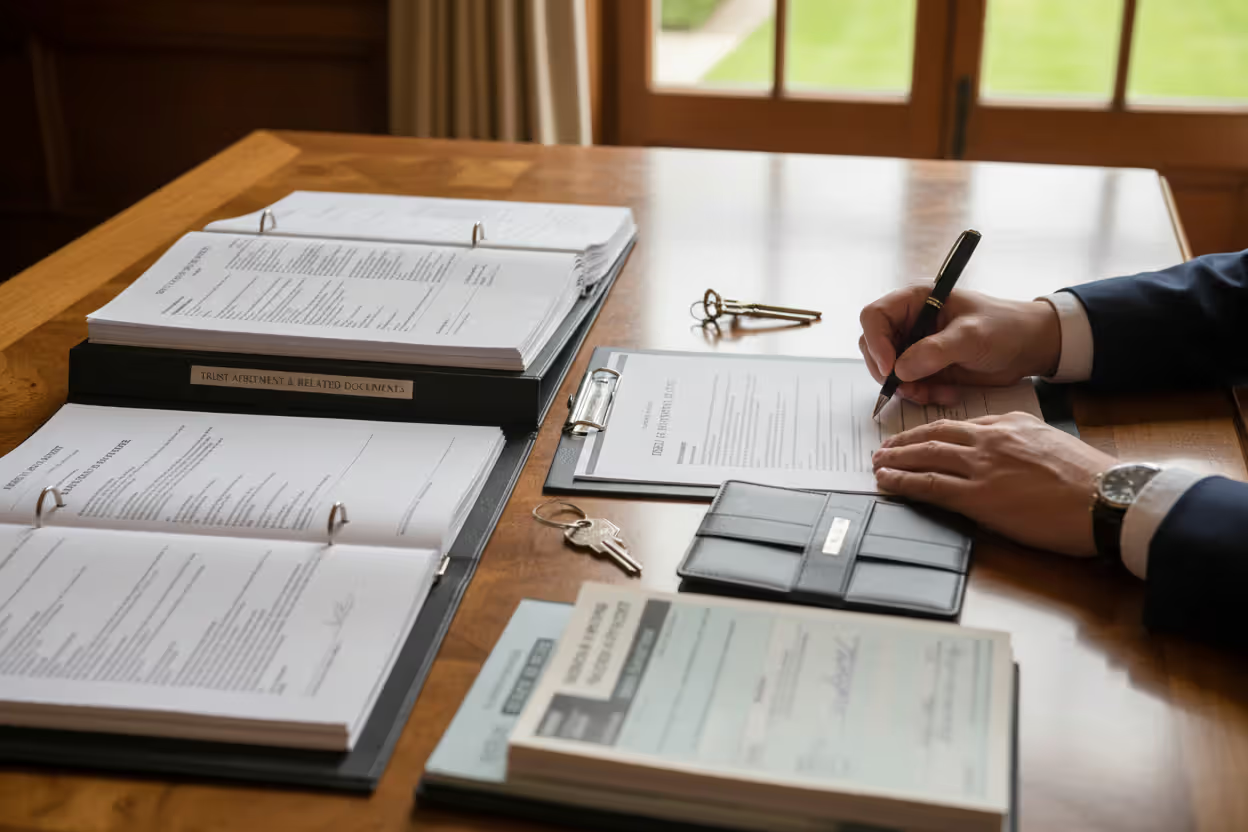
A living trust controls only assets you've formally transferred into it. You have to change titles—deeds, account registrations, everything—to the trust's name. People constantly create trusts and then forget this step, making the trust worthless.
Author: Caroline Ellsworth;
Source: harbormall.net
Leaving beneficiary designations outdated
Your ex-spouse stays listed as beneficiary on your $500,000 life insurance policy until you submit paperwork changing it. Retirement accounts and insurance policies with designated beneficiaries override your will completely, so check these designations every couple of years.
Overlooking digital assets
Cryptocurrency wallets, Etsy shops, monetized YouTube channels, valuable domain names, photo libraries—these have real worth. If your executor doesn't know these assets exist or can't access them, they're lost. Create an inventory with access credentials (stored securely).
Using forms from the wrong state
Estate planning DIY forms must comply with your state's specific laws. Community property states (Arizona, California, Idaho, Louisiana, Nevada, New Mexico, Texas, Washington, Wisconsin) operate under different rules than the other 41 states. Moving to a different state may invalidate documents you created in your previous home state.
Setting it and forgetting it
Marriage, divorce, births, deaths, major inheritances, selling a business, buying property, relocating to a new state—all these require updating your estate plan. Review your documents every three to five years minimum, or immediately after significant life changes.
Choosing the wrong trust type
Some people establish revocable living trusts when their actual goal requires an irrevocable trust. Revocable trusts offer zero protection from creditors or lawsuits. Understanding this distinction prevents expensive mistakes.
When You Should Hire an Estate Planning Attorney Instead
Can I do my own estate planning? In certain situations, definitely not. Some circumstances demand professional legal guidance.
Estates approaching or exceeding federal or state thresholds
Estates nearing $13.99 million need sophisticated tax strategies that DIY platforms don't provide. Several states impose estate taxes at much lower levels—Massachusetts at $2 million, Oregon at $1 million—requiring professional help much earlier.
You own a business
Whether it's a sole proprietorship, partnership, LLC, or corporation, business succession planning requires addressing business continuity, partner buyout agreements, and tax consequences. Your business often represents your largest asset and deserves specialized attention.
Second marriages with children from prior relationships
You want to provide for your current spouse while protecting your children's eventual inheritance. This creates competing interests that need careful trust structuring to prevent post-death disputes.
A family member with disabilities receives government benefits
If your child with disabilities receives SSI or Medicaid, inheriting assets directly disqualifies them from benefits. Special needs trusts preserve eligibility while supplementing government benefits, but strict legal rules govern their creation.
You face significant liability exposure
Doctors, business owners, and others at high risk of lawsuits need irrevocable trusts and other protective strategies. These require attorney expertise to structure correctly without violating fraudulent transfer laws.
Charitable giving is part of your plan
Charitable remainder trusts, charitable lead trusts, and private foundations provide tax advantages but must comply with complex IRS regulations.
You expect custody disputes over your children
If family members will likely fight your guardian designation in court, attorney-drafted documents with detailed explanations strengthen your legal position.
For straightforward situations—young couples, simple distribution plans, basic directives—doing it yourself works perfectly well. But business interests, blended families, or estates over $5 million? The cost of mistakes dwarfs attorney fees. I've watched families spend $50,000 in litigation over problems that $2,000 in upfront legal work would have completely prevented
— Jennifer Martinez
Frequently Asked Questions About DIY Estate Planning
Do it yourself estate planning gives you control over protecting your family and assets without spending thousands on attorney fees—when your circumstances fit the DIY profile. Simple estates with uncomplicated distribution wishes, traditional family structures, and assets below estate tax thresholds work perfectly for self-guided planning.
Success requires attention to detail: cataloging assets, thoughtfully selecting beneficiaries and fiduciaries, using state-appropriate forms, executing documents with proper signatures and witnesses, and storing originals securely. Watch out for pitfalls like outdated beneficiaries, unfunded trusts, and signature errors that void your hard work.
Know when you've outgrown DIY solutions. Business ownership, blended families, special needs planning, and high-value estates benefit from professional expertise that prevents mistakes costing your family tens of thousands. Even with straightforward situations, consider paying an attorney for a one-time document review—a few hundred dollars now prevents family disasters later.
This isn't a one-and-done project. Life changes, laws evolve, and your plan needs to keep pace. Build in regular reviews and updates so your documents stay current and effective. Whether you handle it yourself or hire professional help, the peace of mind from knowing your wishes are documented properly and legally valid makes the effort worthwhile.
Related Stories

Read more

Read more



The content on this website is provided for general informational and educational purposes only. It is intended to explain concepts related to estate planning, wills, trusts, tax strategies, and financial legacy planning.
All information on this website, including articles, guides, worksheets, and planning examples, is presented for general educational purposes. Estate planning situations may vary depending on personal circumstances, financial structures, legal regulations, and jurisdiction.
This website does not provide legal, financial, or tax advice, and the information presented should not be used as a substitute for consultation with qualified legal, tax, or financial professionals.
The website and its authors are not responsible for any errors or omissions, or for any outcomes resulting from decisions made based on the information provided on this website.