

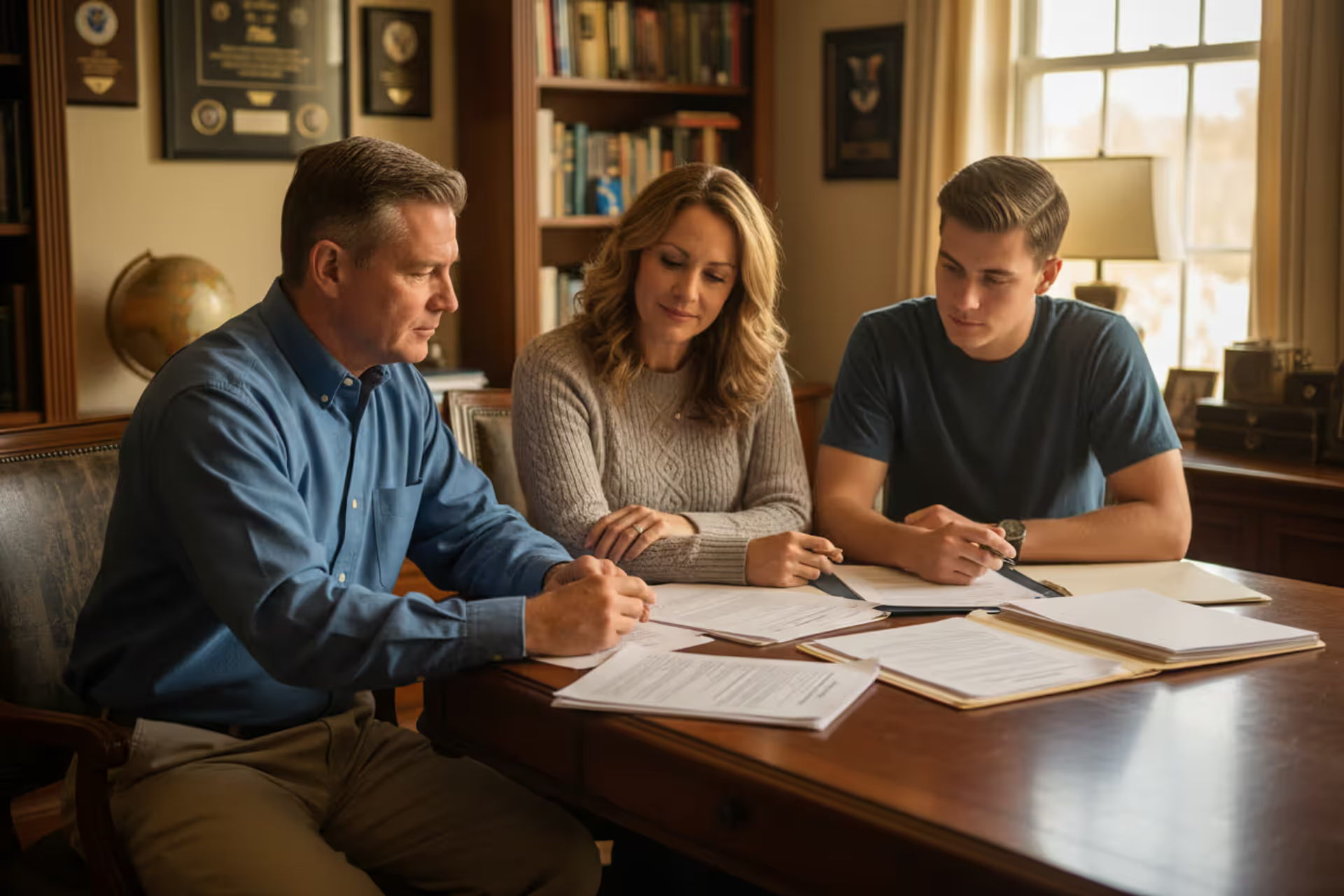
Middle-aged couple sitting at a table reviewing legal documents together in a bright living room with coffee mugs and natural lighting
Estate Planning for Unmarried Couples Guide

Over 18 million American couples share their lives without marriage licenses. Here's what most don't realize: legally speaking, you're strangers. Twenty years together? Doesn't matter. Shared mortgage? Irrelevant. Joint bank account? Won't help when things go wrong.
I've watched this play out dozens of times. One partner ends up in the ICU after a car accident. The other gets turned away at the hospital door because they're "not family." Or someone dies unexpectedly, and their grieving partner discovers the house they've lived in for a decade now belongs to the deceased's estranged sister in Phoenix.
These aren't rare edge cases. They're predictable outcomes when unmarried couples skip estate planning.
Why Unmarried Couples Need Estate Planning
Here's how your state sees your relationship: it doesn't. When you die without planning documents, intestate laws kick in. Every state follows the same basic pattern—your stuff goes to blood relatives in a specific order. Parents first, then siblings, sometimes cousins or even the state itself.
Your partner's name appears nowhere on that list.
Think about medical emergencies for a second. Last Tuesday, you're fine. This Tuesday, you're unconscious in a trauma unit. Who decides whether to perform emergency surgery? Who gets updates from doctors? In most states, hospitals default to your legal next-of-kin—parents, adult kids, siblings. Your partner of twelve years stands in the waiting room with no information and no authority.
Banks follow similar rules, and they're not sympathetic. When one account holder dies, institutions freeze joint accounts pending probate. I've seen surviving partners unable to withdraw money for groceries while waiting weeks for legal resolution. Mortgage payments bounce. Utility companies send disconnect notices. Financial chaos hits exactly when someone's least equipped to handle it.
The family conflict scenarios get uglier. Hostile relatives have physical locks changed on shared homes. They've excluded partners from funerals for loved ones who died in their arms. They've confiscated photo albums, pets, and sentimental items that meant nothing to them but everything to the surviving partner.
I've represented the partner who got locked out of her own home three days after her girlfriend's funeral. The deceased woman's brother showed up with a moving truck and a sheriff's deputy. No will existed, so legally, he owned everything. She lost the house, the furniture they'd picked out together, even the dog they'd raised from a puppy. Could we have prevented this with a $1,200 estate plan? Absolutely. Did she think she needed one? Never crossed her mind
— Jennifer Martinez
Building an unmarried couples estate plan fixes these vulnerabilities. The right paperwork means your partner makes medical decisions, accesses necessary funds, inherits what you intended, and maintains some stability when their world falls apart.
Key Differences Between Married and Unmarried Estate Planning
Marriage gives couples an instant legal infrastructure. Sign one certificate, get fifty automatic rights. Unmarried partners? You're building that infrastructure from scratch, one document at a time.
Take estate taxes. In 2026, individuals can transfer $13.99 million before federal estate taxes apply. Married couples get unlimited marital deduction—transfer $50 million to your spouse tax-free if you want. Unmarried partners get no special treatment. Transfer more than your individual exemption, and the IRS takes 40% of the excess.
Intestate succession tells the real story. Die without a will while married, and your spouse typically inherits half your estate minimum, often everything. Die unmarried, and your partner gets nothing—zero—unless they hire lawyers and fight your relatives in court.
| Legal Right/Benefit | Married Couples | Unmarried Couples |
| Inheritance without a will | State law guarantees spouse receives 50-100% automatically | Partner receives nothing; assets go to blood relatives |
| Authority to make medical decisions | Recognized immediately as next-of-kin | No authority unless healthcare proxy exists |
| Federal estate tax benefits | Unlimited transfers between spouses tax-free | No special deduction; standard exemption only |
| Medical records and HIPAA access | Automatic access as spouse | Blocked unless written authorization provided |
| Social Security survivor payments | Qualifies for monthly benefits | Never eligible regardless of relationship length |
| Family Medical Leave Act protection | Covers time off for spouse's serious illness | No federal protection for partner's illness |
| Default property rights | Community property or elective share in many jurisdictions | Rights limited strictly to title documents |
| Standing to file wrongful death claims | Automatic right in all 50 states | Most states don't recognize partner claims |
| IRA and 401(k) inheritance options | Can roll into own IRA with no immediate taxes | Must take distributions and pay taxes immediately |
Probate creates more headaches for nonmarried couple estate planning. Many states offer simplified probate or complete exemptions for surviving spouses. Your unmarried partner gets the full probate experience—court filings, legal fees, public proceedings, and months of waiting.
Retirement accounts show another gap. When a spouse inherits your IRA, they roll it into their own account. No taxes due, no required distributions yet. When your unmarried partner inherits that same IRA, the IRS forces distributions based on life expectancy tables. They'll pay taxes years or decades earlier than a spouse would, shrinking the account's long-term value substantially.
Essential Estate Planning Documents for Domestic Partners
Estate planning for domestic partners needs multiple documents working together. Miss one piece, and you've left a gap that causes problems later.
Wills and Beneficiary Designations
Your will tells the probate court how to distribute assets, but here's the catch—many assets never touch probate. Retirement accounts, life insurance, payable-on-death bank accounts? They all bypass your will entirely.
Write your will with specificity. "I leave my estate to my partner Jamie" sounds clear until the court asks which Jamie and whether "partner" has legal meaning. Use full legal names: "I leave my entire estate to Jamie Katherine Morrison, born May 3, 1985, currently residing at 421 Oak Street, Portland, Oregon."
Now audit every beneficiary designation you've ever filled out. That 401(k) from your job eight years ago? Still lists your college girlfriend. The life insurance policy worth $300,000? Shows your mom as beneficiary because you bought it at 25 and never updated it. Your will can be perfect, but these designations override it every time.
I recently worked with a client whose partner died unexpectedly at 52. Beautiful will leaving everything to her. Unfortunately, his $680,000 in retirement accounts listed his ex-wife from a marriage that ended in 2009. She got the money. The will was irrelevant.
Update beneficiaries after every major life change, then check annually anyway. Also name contingent beneficiaries—if your partner dies before you, where should assets go? Without contingents, those assets might flow through intestate succession to relatives you'd never choose.

Author: Michael Stratford;
Source: harbormall.net
Durable Power of Attorney
This document lets someone manage your finances when you can't. Bills need paying, mortgage is due, property taxes come whether you're conscious or not.
You'll choose between immediate powers and springing powers. Immediate authority works right away—your partner could use it tomorrow if needed. Springing powers only activate when you're incapacitated, which sounds safer but creates practical nightmares. Banks often reject springing powers because proving incapacity requires doctor certifications, and institutions worry about liability.
I recommend immediate powers with someone you trust completely. The risk of abuse is lower than the risk of your partner being unable to pay bills when you're hospitalized.
Spell out exactly what powers you're granting. General powers give broad authority over everything financial. Limited powers restrict authority to specific accounts or transactions. Most unmarried partners need general powers—you can't predict what financial issues arise during incapacity.
Some states require separate real estate powers of attorney for property transactions. Check your state requirements and execute whatever documents apply.
Include a successor agent. If your primary agent can't serve (or you're both in the same accident), who steps in? Maybe a trusted sibling, close friend, or adult child.
Healthcare Proxy and Living Will
A healthcare proxy names who makes medical decisions when you're unable. It's different from a living will, which specifies your end-of-life preferences.
Your proxy should name your partner as primary agent, but include a successor. What if you're both in the same car crash? What if your partner is too emotionally devastated to make clear decisions? A backup agent ensures someone you trust has authority.
The document needs explicit HIPAA authorization. Without it, privacy laws prevent doctors from discussing your condition with anyone, even your designated agent.
Living wills tackle specific scenarios—terminal diagnosis, persistent vegetative state, irreversible brain damage. Do you want feeding tubes? Ventilator? CPR? These conversations are hard, but having them before a crisis beats letting family members guess (or fight about) your wishes.
Many hospitals use their own forms alongside state statutory documents. Execute both. Get forms from any hospital where you might receive treatment—the one near your home, the one near your office, the one near your parents if you visit often.
Keep a wallet card saying these documents exist and where you've stored them. Emergency room staff need this information immediately, not three days later when someone thinks to mention it.
Property Ownership Agreements
Cohabitation agreements work like prenups for unmarried couples. They specify who owns what, how you'll handle finances, and what happens if you split up or someone dies.
A solid agreement covers property you brought into the relationship, property you acquire together, how you'll split expenses, and what happens upon separation or death. Include current assets (your car, your retirement account, your furniture) and future assets (the house you'll buy next year).
These agreements matter especially when contributions are unequal. Say you pay 70% of a home down payment, but you take title as joint tenants with equal ownership. You've legally gifted half your contribution to your partner. A cohabitation agreement can document actual ownership percentages and protect your investment.
Some couples resist these agreements, thinking they're unromantic. I'd argue the opposite. Clear agreements prevent bitter fights later. They force conversations about assumptions and values. And they protect both people, not just one.
Courts generally enforce these agreements if they're written properly. Have an attorney draft it to ensure enforceability in your state.

Author: Michael Stratford;
Source: harbormall.net
How to Structure Property Ownership as Unmarried Partners
The words on your property deed control what happens when you die, and the wrong ownership structure destroys even the best estate plan.
Joint tenancy with right of survivorship means the property automatically passes to the surviving owner when one dies. No probate, no will required—the survivor owns everything. This works well for partners wanting the survivor to inherit.
But joint tenancy means equal ownership regardless of who paid what. Put up the entire $200,000 down payment yourself but add your partner as joint tenant? You've made a taxable gift of $100,000. For expensive properties, this can trigger gift tax reporting or use up part of your lifetime exemption.
Joint tenancy also exposes property to both partners' creditors. Your partner gets sued or declares bankruptcy? Your shared home could end up in the crossfire.
Tenancy in common lets you own unequal percentages, and there's no automatic survivorship. You own 65%, your partner owns 35%—reflecting actual contributions. When you die, your 65% goes according to your will, not automatically to your co-owner.
This structure offers flexibility. You might leave your share to your partner, or split it between your partner and kids from a previous marriage. But tenancy in common requires explicit estate planning—without a will, your share goes to relatives through intestate succession.
Some couples put real estate in revocable living trusts. The trust owns the property, and the trust document specifies exactly how to distribute it, how to manage it during incapacity, and how to avoid probate. Trusts cost more upfront ($2,000-$5,000 typically) and require ongoing administration, but they provide more control than simple joint ownership.
Consider life insurance as a property protection tool. A $400,000 policy naming your partner as beneficiary provides cash to pay off the mortgage, buy out other heirs, or cover estate taxes. This works particularly well when you have children from previous relationships and want to provide for everyone without forcing property sales.
Common Estate Planning Mistakes Nonmarried Couples Make
Assuming common-law marriage exists tops the list. Only eight states currently recognize common-law marriages, and the requirements are strict—not just living together. You must present yourselves publicly as married, file joint tax returns, use the same last name. Living together 30 years doesn't create common-law marriage in the other 42 states.
Forgetting to update beneficiaries after relationships change causes enormous damage. Your ex-boyfriend from 2015 is still listed on accounts worth $450,000. Financial institutions legally must follow the beneficiary designation on file. Your current intentions don't matter. Your will doesn't override beneficiary forms.
Not documenting medical wishes thoroughly enough leads to family conflicts during health crises. Your partner believes you wouldn't want artificial life support. Your parents insist you'd want every intervention possible. Without crystal-clear legal documents, medical providers usually defer to blood relatives, potentially cutting your partner out of decisions entirely.
Creating wills but skipping other documents leaves dangerous gaps. A will doesn't give your partner authority to access accounts during your incapacity, make medical decisions while you're in surgery, or handle financial matters when you're hospitalized. You need the complete package—wills, powers of attorney, healthcare directives, property agreements.
Digital assets represent a newer problem area that catches people off guard. Email accounts, cryptocurrency wallets, cloud storage, social media profiles, digital photos—all require specific authorization for access. Most terms of service prohibit password sharing, and standard powers of attorney might not cover digital assets unless you add explicit language. Create a separate inventory listing digital assets, access information (stored securely), and handling instructions.
Holding everything jointly seems like an easy solution but creates unexpected issues. Joint bank accounts can freeze when one owner dies while the bank processes estate paperwork. Joint business ownership might force your surviving partner into unwanted partnerships with your children or siblings who inherit your share.
Procrastination destroys more estate plans than bad lawyers. Couples discuss needing to "get around to it someday" for years. Incapacity and death don't check your calendar for convenient timing. The estate plan you actually complete beats the perfect plan you never start.

Author: Michael Stratford;
Source: harbormall.net
Partner Estate Planning Checklist
Begin by listing everything you own—real estate, bank accounts, brokerage accounts, retirement plans, life insurance policies, business interests, vehicles, valuable personal property. Write down exactly how each asset is titled and who's listed as beneficiary.
Draft a will that names your partner explicitly as beneficiary. Use their complete legal name—first, middle, last, and maybe date of birth or address for clarity. Specify percentages or particular assets. Include contingent beneficiaries if your partner dies before you. Select an executor who'll respect your wishes—possibly your partner, a trusted friend, maybe a professional fiduciary.
Prepare a durable power of attorney covering financial matters. Name your partner as agent and decide between immediate or springing authority. Add a successor agent as backup. Make sure the document grants authority over everything relevant—banking, real estate transactions, tax matters, government benefits, business decisions.
Execute healthcare proxy and living will documents. Name your partner as your healthcare agent with a successor as backup. Detail your preferences for end-of-life scenarios. Give copies to your doctor, local hospitals, and your healthcare agent. Put a card in your wallet indicating these documents exist and where they're stored.
Audit every single beneficiary designation—retirement accounts, life insurance policies, payable-on-death bank accounts, transfer-on-death brokerage accounts. Confirm your partner appears as primary beneficiary with appropriate contingents. Make this an annual review item every January.
Draft a cohabitation agreement if you share property or contribute unequally to expenses. Address who owns what currently, how you'll handle future acquisitions, how expenses split, and what happens if you separate or someone dies. Have an attorney review it before signing to confirm enforceability.
Examine how you hold title to real estate, vehicles, and other titled property. Does the ownership structure match your intentions? Would joint tenancy, tenancy in common, or trust ownership better serve your goals?
Calculate life insurance needs realistically. How much would your partner need to maintain their current lifestyle, pay off the mortgage, handle final expenses, or buy out other heirs? Purchase adequate coverage and triple-check beneficiary designations.
Build a digital asset inventory. Every email account, social media profile, online bank account, cryptocurrency wallet, cloud storage service, subscription service. Note access credentials and store this information securely—password manager, safe deposit box, somewhere your partner can access if needed. Add explicit digital asset authority to your financial power of attorney.
Put all documents somewhere accessible. Your partner must find them quickly during emergencies—can't help if they're buried in a storage unit across town. Options include a fireproof home safe, safe deposit box (add your partner as authorized user), or copies stored with your attorney. Tell your partner the exact location.
Review everything annually and update immediately after major changes—relocating to a new state, significant financial changes, relationship status changes, health issues. Estate planning isn't one-and-done.
Meet with an attorney who specializes in estate planning for domestic partners. State laws vary dramatically, and professional guidance ensures valid, comprehensive documents. Attorney fees ($1,500-$3,000 typically for basic planning) cost less than the legal mess created without proper planning.

Author: Michael Stratford;
Source: harbormall.net
Frequently Asked Questions About Estate Planning Without Marriage
Unmarried couples deal with legal vulnerabilities married couples never face, but thorough estate planning eliminates nearly all these risks. The documents you execute now determine whether your partner gets protected or pushed aside during the worst moments of their life.
Your relationship might not be automatically recognized, but with deliberate planning, you can create legal protections that are actually stronger and more customized than the standard framework marriage provides. The difference lies in taking action instead of assuming things will work themselves out.
Begin with fundamentals—will, powers of attorney, healthcare directives. These documents cost less than a weekend vacation but provide lifetime protection. Check beneficiary designations on every account, confirm property ownership structures match your intentions, and have honest conversations with your partner about your wishes.
Estate planning isn't morbid thinking—it's the most protective thing you can do for your partner. You're ensuring your years together get honored, your partner receives financial and legal protection, and your wishes get respected regardless of what family members might prefer.
The couples who face devastating outcomes are those who understood they needed planning but kept postponing it. Don't let procrastination leave your partner vulnerable. Schedule an attorney consultation this month, gather your financial information, and execute documents that protect your partnership. Your future self—and your partner—will be grateful you did.
Related Stories

Read more

Read more



The content on this website is provided for general informational and educational purposes only. It is intended to explain concepts related to estate planning, wills, trusts, tax strategies, and financial legacy planning.
All information on this website, including articles, guides, worksheets, and planning examples, is presented for general educational purposes. Estate planning situations may vary depending on personal circumstances, financial structures, legal regulations, and jurisdiction.
This website does not provide legal, financial, or tax advice, and the information presented should not be used as a substitute for consultation with qualified legal, tax, or financial professionals.
The website and its authors are not responsible for any errors or omissions, or for any outcomes resulting from decisions made based on the information provided on this website.