

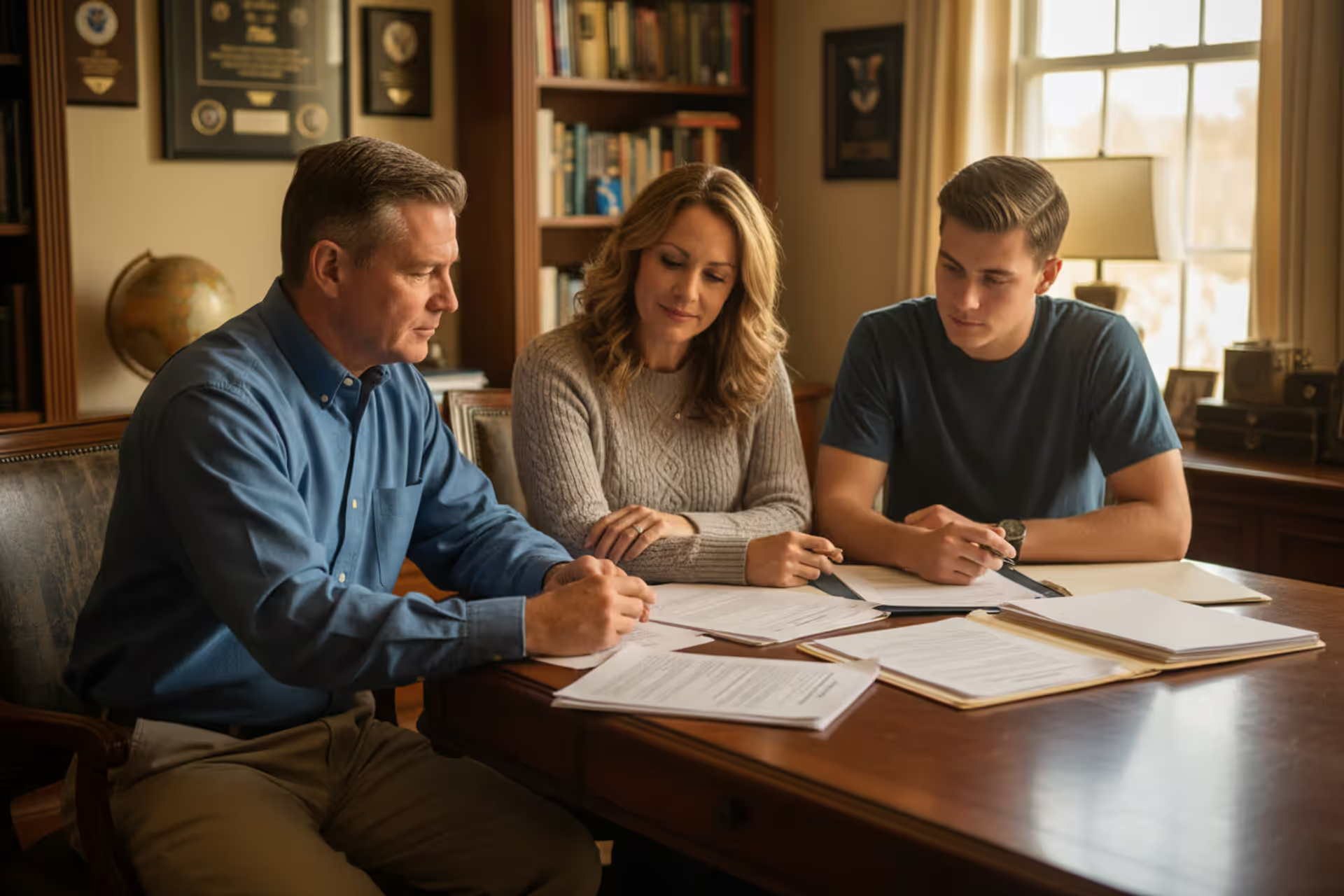
Blended family couple reviewing estate planning documents at home
Estate Planning for Blended Families Second Marriage Guide

Remarriage brings joy, companionship, and a fresh start—but it also introduces complex financial and legal questions that many couples prefer to avoid. When both spouses bring children from previous relationships into a new marriage, the stakes become even higher. Without careful planning, your assets could end up distributed in ways you never intended, leaving your children from a first marriage unprotected or your new spouse financially vulnerable.
The default inheritance laws in most states were written with traditional nuclear families in mind. They don't account for the competing loyalties and obligations that come with blended families. A surviving spouse typically inherits a substantial portion of the estate automatically, which might seem fair until you consider that this could effectively disinherit your biological children. Conversely, leaving everything to your children could leave your current spouse without adequate support.
This guide walks through the specific strategies and legal tools that address these unique challenges, helping you create an estate plan that honors both your commitment to your spouse and your responsibility to your children.
Why Estate Planning Is Different for Blended Families
Estate planning blended families face obstacles that simply don't exist in first marriages. The fundamental tension is straightforward: you want to provide for your spouse after you're gone, but you also want to ensure your children from your previous relationship ultimately receive their inheritance. These two goals can directly conflict.
Consider what happens under typical state intestacy laws. If you die without a will in most states, your spouse receives anywhere from one-third to one-half of your estate, with the remainder split among your children. Your spouse then controls those assets and can spend them, invest them poorly, or eventually leave them to their own children—cutting your biological children out entirely.
Even with a simple will leaving everything to your spouse with the understanding that they'll "take care of the kids," you're relying entirely on trust and good intentions. Circumstances change. Your spouse might remarry again, face financial pressures, or develop strained relationships with your children. They have no legal obligation to preserve anything for your children.
The emotional dynamics add another layer of complexity. Stepchildren and stepparents may have cordial relationships, but they rarely share the same bond as biological parents and children. Money amplifies these tensions. A stepparent who receives full control of assets may genuinely believe they're being fair while your children feel cheated. Without clear legal structures, families that seemed harmonious can fracture permanently over inheritance disputes.

Author: Michael Stratford;
Source: harbormall.net
Blended family estate planning also requires navigating competing timelines. Your spouse may need income from your assets for decades, but your children—who may already be adults—want certainty about their eventual inheritance. Balancing immediate needs against future promises requires specific legal mechanisms, not just good intentions.
Common Estate Planning Mistakes in Second Marriages
The most dangerous assumption in estate planning for second marriages is that your spouse will honor your wishes after you're gone. Even with the best intentions, they're under no legal obligation to do so. A simple will leaving everything to your spouse gives them complete control. They can spend it all, leave it to their own children, or make any changes they want.
Another frequent error is failing to update beneficiary designations. When you die, your 401(k), IRA, life insurance, and transfer-on-death accounts bypass your will entirely and go straight to whoever's listed on those forms. Many people discover too late they forgot to remove an ex-spouse from a policy purchased twenty years ago, or they named their current spouse on every account without considering how this leaves their children with nothing. The beneficiary form trumps whatever instructions appear in your will, creating outcomes you never intended.
Treating stepchildren and biological children identically without legal formalization creates problems. Stepchildren have zero inheritance rights under the law unless you've formally adopted them. If you consider them your children and want them included, you must explicitly name them in your planning documents. Assuming they're covered because you consider them family isn't enough.
Many couples also avoid difficult conversations, hoping to prevent conflict. They don't discuss their plans with their children or their spouse, leaving everyone to discover the arrangements after death when emotions run high and nothing can be changed. This secrecy breeds suspicion and resentment.
Second marriage trust planning gets overlooked entirely by couples who think trusts are only for the wealthy. They rely on simple wills or joint ownership structures that seem straightforward but create significant problems. Joint ownership with a spouse means the surviving spouse owns everything outright—your children from a first marriage have no guaranteed claim.
Finally, many people create an estate plan at remarriage but never update it. Children are born, stepchildren become closer, financial situations change, and tax laws evolve. Plans drafted a decade ago probably don't match your current circumstances or reflect how your family relationships have developed.

Author: Michael Stratford;
Source: harbormall.net
Trust Options for Blended Family Estate Planning
Trusts provide the legal framework to balance competing interests in blended families. Unlike wills, which simply transfer ownership, trusts can control how assets are used over time, protecting both your spouse during their lifetime and preserving assets for your children.
QTIP Trusts (Qualified Terminable Interest Property)
The Qualified Terminable Interest Property trust addresses the exact dilemma most second marriages face. Here's how it works: Upon your death, designated assets fund the trust. Your surviving spouse receives all income the trust generates—every quarter, every year, for as long as they live. However, they cannot access the underlying principal except under very specific circumstances, and they cannot redirect where those assets eventually go. After your spouse passes away, everything remaining in the trust transfers to the beneficiaries you originally named—typically your children from your first marriage.
This arrangement qualifies for the marital deduction under federal tax law, which means your estate pays no taxes when you die. The tax obligation gets pushed forward to when your spouse eventually passes. You can structure the trust to allow principal distributions for specific needs like medical emergencies, nursing home care, or home maintenance, giving your spouse security while still protecting the ultimate inheritance.
The key advantage is certainty. Your children know they'll eventually receive the assets, while your spouse has guaranteed income. The trustee—often a professional or trusted family member—manages the investments and ensures distributions follow the trust terms.

Author: Michael Stratford;
Source: harbormall.net
Bypass Trusts
Sometimes called a credit shelter trust or family trust, this vehicle takes advantage of your federal estate tax exemption to shield wealth from taxation. Currently, the federal exemption sits at a substantial level, though scheduled reductions may occur in 2027 without Congressional intervention. The bypass trust captures assets up to your available exemption amount, provides specified benefits to your spouse throughout their life, then delivers everything to your children without additional estate tax consequences.
These structures work particularly well when paired with QTIP trusts in what estate planners call an "AB trust" arrangement. The bypass trust (A trust) captures assets equal to your exemption, while the QTIP trust (B trust) receives everything else. This combination maximizes tax efficiency while balancing the needs of your spouse and children.
The downside is complexity and cost. You need professional trustees, annual tax filings, and careful record-keeping. For estates well below the exemption threshold, simpler structures may suffice.
Lifetime Asset Protection Trusts
These irrevocable structures remove assets from your estate entirely, delivering protection from creditors, lawsuits, and estate taxes. You transfer ownership of specific assets into the trust while you're still alive, and the trust holds them permanently. The trustee makes distributions to your spouse, children, or other beneficiaries based on the framework you establish when creating the trust.
Lifetime trusts offer maximum protection but require surrendering direct control. You cannot reverse course and reclaim the assets later. They work best for high-net-worth individuals with significant asset protection concerns or those in high-liability professions like medicine or real estate development.
| Trust Structure | Primary Benefit | Protected Parties | Tax Treatment | Ideal Situation |
| QTIP Trust | Guarantees lifetime income for spouse while securing children's eventual inheritance | Current spouse and biological children equally | Marital deduction postpones taxation until surviving spouse's death | Most remarriages involving children from earlier relationships |
| Bypass Trust | Leverages federal exemption limits to reduce estate tax burden | Children receive primary benefit, spouse gets limited access | Exemption amount avoids estate taxation entirely | Substantial estates approaching or exceeding exemption thresholds |
| Lifetime Asset Protection Trust | Shields wealth from creditors and removes assets from taxable estate | All designated beneficiaries plus grantor from lawsuits | Permanently removes assets from estate tax calculation | High-net-worth individuals and professionals facing liability risks |
How to Provide for Stepchildren in Your Estate Plan
Stepchildren occupy an ambiguous legal position. The law draws a bright line: biological and legally adopted children have statutory inheritance rights, while stepchildren do not. If you want stepchildren to receive anything from your estate, you must explicitly name them in your will or trust.
The first question is whether to pursue stepparent adoption. Legal adoption gives stepchildren identical rights to biological children, including inheritance rights, Social Security survivor benefits, and legal standing. It also terminates the rights of the biological parent who's being replaced. This works well when the other biological parent is absent or deceased, but it's complicated when that parent is still involved in the child's life.
Without pursuing formal adoption, you can still provide for stepchildren through specific bequests in your will or by naming them as trust beneficiaries. A specific bequest might leave them a certain dollar amount, particular property, or a percentage of your estate. This gives you complete control over what they receive.
Stepchildren estate planning often involves difficult questions about fairness versus equality. Should stepchildren receive the same amount as biological children? There's no universal answer. Some factors to consider include the length of your relationship with the stepchildren, their ages when you entered their lives, their financial needs, and what their other biological parent can provide.
Many people choose different approaches for different assets. For example, you might leave family heirlooms or property with sentimental value to biological children while providing financial assets to stepchildren. Or you might create separate trusts with different distribution schedules based on each child's circumstances.
Communication matters enormously. Explaining your reasoning to both your biological children and stepchildren while you're alive can prevent hurt feelings and disputes later. They may not agree with every decision, but understanding your thought process helps.
One practical approach is creating separate trusts for each set of children, funded with specific assets. Your biological children's trust might receive your business or real estate, while your stepchildren's trust receives liquid investments. This prevents conflicts over shared assets and allows customized distribution terms.

Author: Michael Stratford;
Source: harbormall.net
Protecting Your Spouse While Preserving Inheritance for Your Children
The central challenge in estate planning for second marriages is providing for your spouse without disinheritating your children. Several strategies address this tension.
Life insurance offers a clean solution. You can purchase a policy with your children as beneficiaries, ensuring they receive a guaranteed inheritance regardless of what happens to your other assets. Your spouse can inherit your estate for their support, while your children receive the insurance proceeds. The death benefit passes tax-free and outside probate, providing immediate liquidity.
An irrevocable life insurance trust (ILIT) can own the policy, removing the death benefit from your taxable estate and providing professional management. Your children receive the proceeds according to the trust terms you establish, which might include age-based distributions or incentive provisions.
Another approach separates income rights from principal. Your spouse receives all income generated by trust assets—dividends, interest, rent—for their lifetime, providing ongoing support. The principal remains intact for your children. This works well with investment portfolios or rental properties that generate steady income.
The marital home presents unique challenges. If you own the home before remarriage, you might want it to ultimately go to your children, but your spouse needs somewhere to live. A qualified personal residence trust (QPRT) or a trust provision giving your spouse a life estate can grant them the right to live in the home for their lifetime, with ownership passing to your children afterward. Alternatively, life insurance can provide funds for your spouse to purchase their own home.
Retirement accounts require careful beneficiary planning. Naming your spouse as primary beneficiary gives them maximum flexibility for tax-deferred withdrawals, but they could then change the secondary beneficiaries to their own children. A "conduit trust" can be named as beneficiary, requiring all required minimum distributions to pass to your spouse during their lifetime, with remaining funds going to your children after your spouse's death.
Some couples use a "yours, mine, and ours" approach, keeping certain assets separate. Premarital assets might be designated for biological children, while assets acquired during the marriage are shared. Prenuptial or postnuptial agreements can formalize these arrangements.
Author: Michael Stratford;
Source: harbormall.net
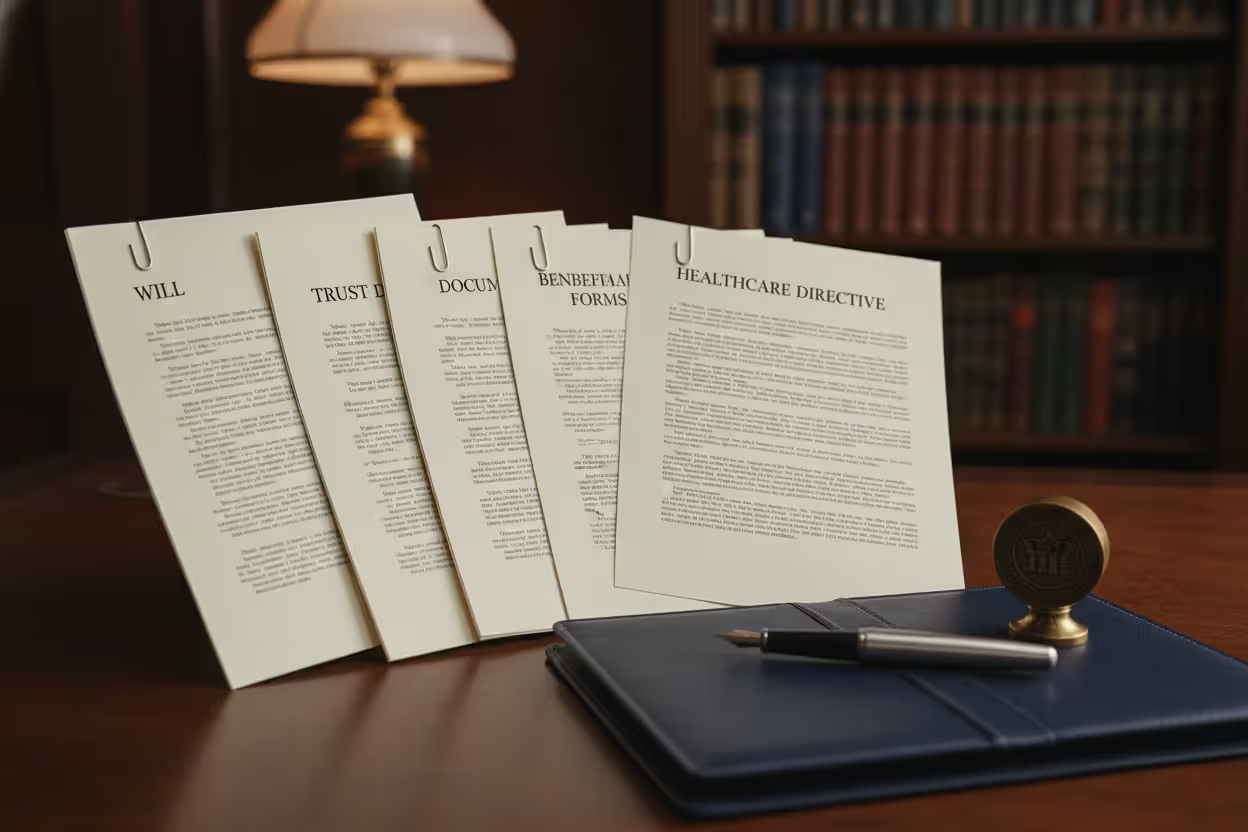
Legal Documents Every Blended Family Needs
Comprehensive estate planning for blended families second marriage requires multiple coordinated documents. Each serves a specific purpose, and gaps in any area can undermine your entire plan.
An updated will is foundational, even if you're using trusts for major assets. Your will covers anything not titled in a trust, names guardians for minor children, and designates an executor. It should explicitly address all children—biological and step—to avoid ambiguity. Without a current will, state intestacy laws control distribution, which rarely aligns with blended family intentions.
Trusts provide the control mechanisms that wills can't offer. As discussed earlier, QTIP trusts, bypass trusts, or other specialized trusts allow you to provide for your spouse while protecting your children's inheritance. Trusts also avoid probate, maintaining privacy and reducing delays.
All account beneficiary forms—covering 401(k)s, IRAs, individual life insurance policies, and bank accounts with transfer-on-death provisions—must coordinate with your broader planning strategy. These designation forms operate independently of your will, meaning what you wrote in those documents controls regardless of other instructions. After remarrying, most people update their will but completely forget about beneficiary paperwork they completed years or decades earlier.
You'll need documents authorizing someone to manage your finances and legal affairs if illness or injury leaves you unable to make decisions yourself. In blended families, choosing between your spouse and your adult children can be sensitive. Some people name co-agents who must act together, while others designate their spouse for immediate decisions with children as successor agents.
Healthcare directives and living wills specify your medical wishes and designate someone to make healthcare decisions when you can't. Again, blended families face delicate choices. Your spouse may be the natural choice, but adult children from a first marriage might have different views about end-of-life care.
Prenuptial and postnuptial agreements aren't just for divorce planning. They clarify which assets remain separate property and which are marital property, directly affecting estate planning. These agreements can waive spousal inheritance rights, allowing you to leave assets to your children without your spouse having a legal claim.
A letter of instruction, while not legally binding, provides guidance to your executor and family about your wishes, the location of important documents, and your reasoning for certain decisions. This informal document can reduce confusion and family conflict.
The biggest mistake I see in blended families is assuming love will solve everything. Couples believe their spouse will naturally take care of their children, or that their children will understand why the spouse inherited everything. Estate planning isn't about distrust—it's about creating clear legal structures so family members don't have to make impossible choices or navigate competing interests during grief. The families that do this right have difficult conversations early, document everything clearly, and review their plans regularly
— Margaret Chen
Frequently Asked Questions About Blended Family Estate Planning
Estate planning for blended families requires more than standard documents—it demands customized legal structures that acknowledge competing loyalties and protect everyone's interests. The goal isn't choosing between your spouse and your children; it's creating a plan that provides for your spouse during their lifetime while preserving your children's inheritance.
The strategies outlined here—QTIP trusts, life insurance solutions, careful beneficiary designations, and comprehensive legal documents—give you the tools to accomplish both objectives. What matters most is taking action before it's too late. Difficult conversations with your spouse and children, while uncomfortable, prevent far worse conflicts after you're gone.
Work with an experienced estate planning attorney who regularly handles blended family situations. These cases involve nuances that generic online documents can't address. Your attorney can help you navigate state-specific laws, tax implications, and family dynamics to create a plan that truly reflects your wishes.
Review and update your plan regularly. Blended families are dynamic—relationships evolve, financial situations change, and laws are modified. An estate plan is never truly finished; it's an ongoing process of ensuring your wishes remain clear and legally enforceable.
The peace of mind that comes from knowing both your spouse and your children are protected is worth every hour and dollar invested in proper planning. Your family's harmony and financial security depend on the decisions you make now.
Related Stories

Read more

Read more



The content on this website is provided for general informational and educational purposes only. It is intended to explain concepts related to estate planning, wills, trusts, tax strategies, and financial legacy planning.
All information on this website, including articles, guides, worksheets, and planning examples, is presented for general educational purposes. Estate planning situations may vary depending on personal circumstances, financial structures, legal regulations, and jurisdiction.
This website does not provide legal, financial, or tax advice, and the information presented should not be used as a substitute for consultation with qualified legal, tax, or financial professionals.
The website and its authors are not responsible for any errors or omissions, or for any outcomes resulting from decisions made based on the information provided on this website.