

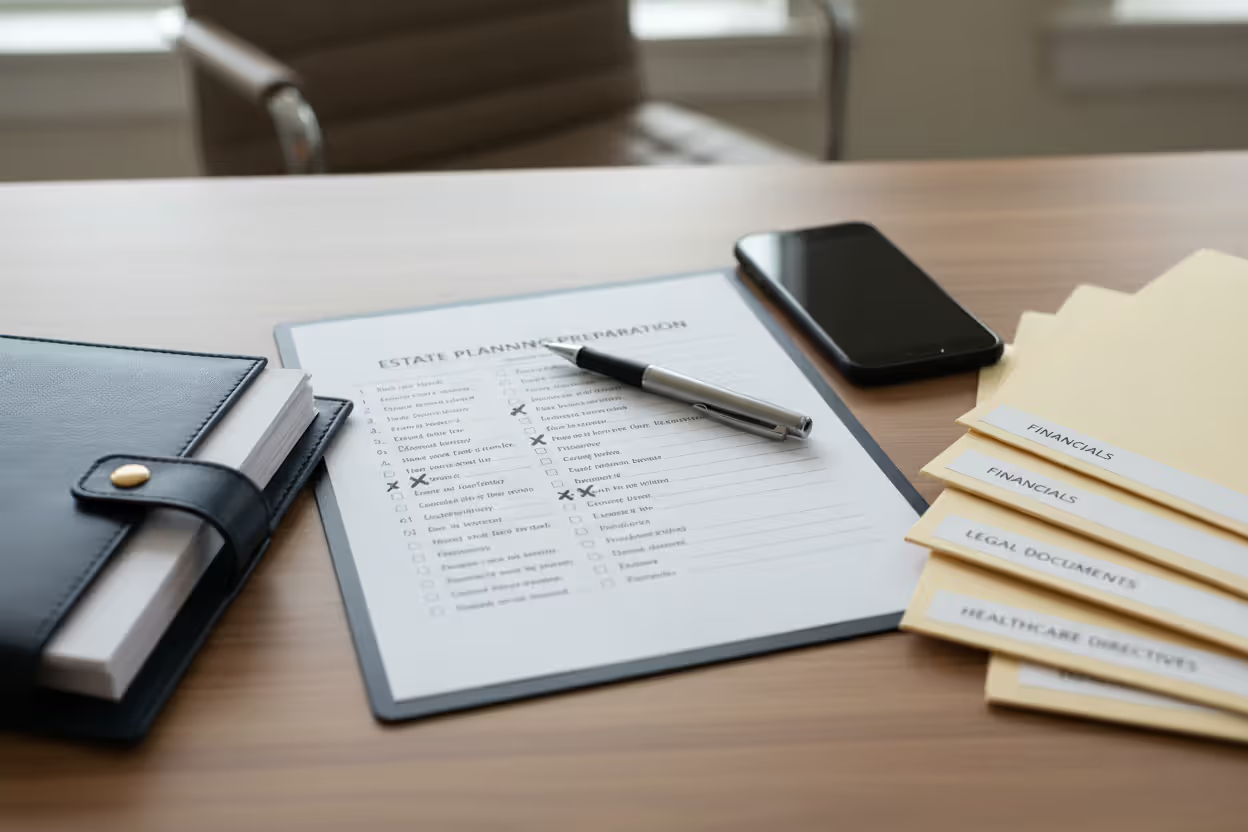
Estate planning documents and checklist organized on a desk
Estate Planning Checklist PDF Guide

Most people push estate planning to some vague future date—maybe when they retire, or when they "get around to it." Then a health scare hits, or a friend passes away unexpectedly, and suddenly the urgency becomes real. Having your affairs organized does more than check a box on your to-do list. It prevents your family from making difficult decisions during emotionally devastating circumstances.
Here's what changes when you use a structured approach: instead of your spouse scrambling through desk drawers looking for account passwords, they find everything labeled in one place. Rather than siblings arguing about who gets grandma's jewelry, they follow the clear instructions you left. The checklist method turns estate planning from an anxiety-inducing mountain into a series of small, doable hills.
What Is an Estate Planning Checklist?
Think about planning a major home renovation. You wouldn't just start knocking down walls—you'd create a list of everything needed, from permits to materials to contractor contacts. That's exactly what a checklist for estate planning does for organizing your legacy.
This document maps out every piece of your estate planning puzzle: which legal forms you need, what financial information to compile, and which decisions only you can make. It's not the estate plan itself—think of it as your assembly instructions.
Why bother with a separate checklist? Because estate planning involves dozens of moving pieces that span legal, financial, medical, and personal domains. Most people remember the big items like creating a will, then completely forget about updating their IRA beneficiaries or documenting their cryptocurrency wallet recovery phrases. These gaps create real problems.

Author: Rebecca Langford;
Source: harbormall.net
The estate planning document checklist delivers three concrete advantages. It prevents you from staring at a blank page wondering where to start—each item tells you the next action to take. When meeting with your attorney or financial planner, you'll have the information they need instead of scheduling multiple follow-up appointments. Perhaps most importantly, it creates visual progress. Checking off completed items builds momentum that carries you through the harder decisions.
Should your checklist be digital or printed? Many people swear by physical copies. There's something satisfying about putting pen to paper, and you can keep it in the same folder as your related documents. A printed checklist doesn't require passwords, won't disappear if your hard drive crashes, and works even when your internet's down. Plus, you can easily show it to family members or advisors without worrying about screen sharing.
Essential Documents for Your Estate Planning Checklist
Estate planning documentation splits into two categories: the legal instruments that tell everyone what to do, and the financial records that show them what you actually have.
Legal Documents You Must Include
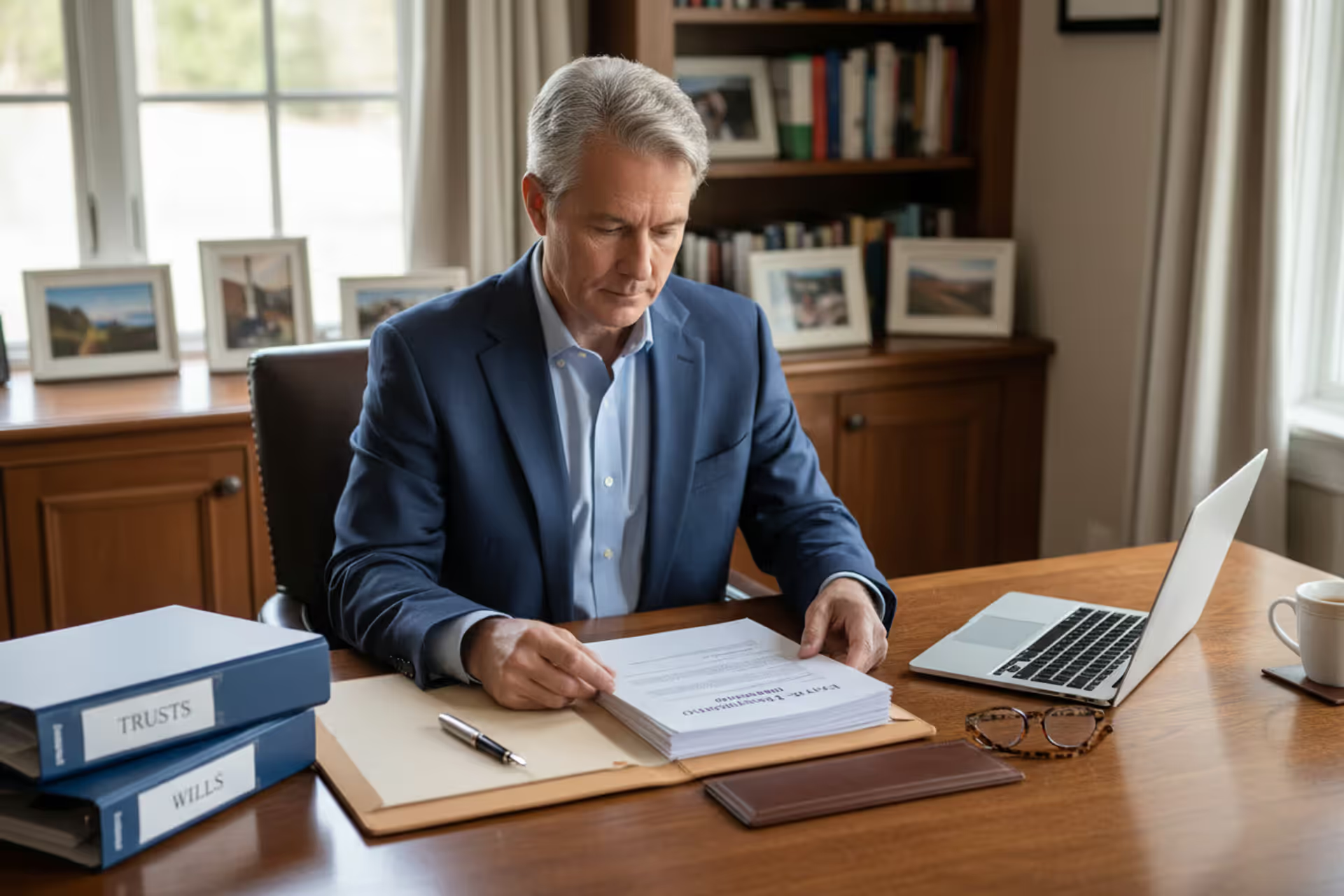
Your last will and testament handles the basics—who manages your estate (the executor), who raises your kids if something happens to you, and who gets what property. Skip this document and your state's default inheritance rules take over, which might mean your assets go to relatives you haven't spoken to in decades while your best friend who's been like family gets nothing.
Revocable living trusts serve a different purpose. Put assets into a trust and they skip the probate process entirely. That means faster distribution to your heirs and complete privacy, since probate records become public information that anyone can access. Trusts also let you add conditions—maybe your 19-year-old gets their inheritance in installments rather than a lump sum they might blow on a sports car.
When you sign a durable power of attorney, you're authorizing someone to step into your financial shoes if you can't function. Maybe you're in a coma after a car accident. Maybe dementia makes you unable to manage accounts. This person handles everything money-related: paying your mortgage, filing taxes, selling property if needed. Without this authorization, your family's only option involves going to court for a conservatorship appointment, which takes months and costs thousands in legal fees.
Healthcare directives come in two parts. The healthcare power of attorney names your medical decision-maker when you can't communicate. The living will documents your preferences about life support, resuscitation, and end-of-life care. These papers prevent families from fighting in hospital hallways about whether to continue treatment, and they relieve your loved ones from guessing what you would have wanted.
Beneficiary designation forms control who inherits your 401(k), IRA, life insurance proceeds, and payable-on-death bank accounts. Here's the critical part: these forms override whatever your will says. You could have a will leaving everything to your kids, but if your ex-spouse is still named on your life insurance beneficiary form, they're getting that money.
A letter of intent has zero legal authority, but it fills in gaps your legal documents can't address. Explain why you divided property the way you did. Describe your funeral preferences. List where you hid that spare house key or stored your grandmother's wedding ring. Give your executor the practical details they'll desperately need.
Financial Documents to Gather
Compile a complete asset list: every bank account with current balances, all investment accounts with approximate values, real estate with addresses and estimated worth, vehicles with year and model, business interests with ownership percentages. Include account numbers and financial institution names so your executor can actually locate everything.
Debts need documentation too. List every mortgage, car loan, student loan, credit card balance, and personal IOU. Estates must settle debts before distributing assets to heirs, so your executor needs the complete financial picture.
Gather all insurance policies: life, health, long-term care, disability, homeowners, auto, umbrella liability. For each policy, note the company name, policy number, coverage amount, and agent contact information. Store actual policy documents where your executor can find them.
Keep your last three years of tax returns accessible. They reveal income sources your executor might not know about, show whether you made estimated tax payments, and help identify potential tax issues your estate might face.
Author: Rebecca Langford;
Source: harbormall.net
How to Use a Printable Estate Planning Checklist
Download or create a printable estate planning checklist covering every major category discussed here. Print several copies—mark up your working version with notes and scribbles, then prepare a clean final copy for your records.
Block out specific times for estate planning work. Maybe Sunday afternoon for two hours. Schedule it like a doctor's appointment you can't skip. Trying to power through everything in one exhausting day leads to mistakes and burnout. Better to consistently chip away at sections: spend one session organizing financial statements, another researching estate attorneys, a third calling your insurance agent for policy details.
Develop a three-tier marking system as you progress. Put a checkmark next to completed items with a note about document location. Circle in-progress items and write what needs to happen next—"call attorney for consultation" or "locate mom's insurance policy from 2015." Cross out items that don't apply to your situation. This system shows at a glance what needs attention versus what's handled.
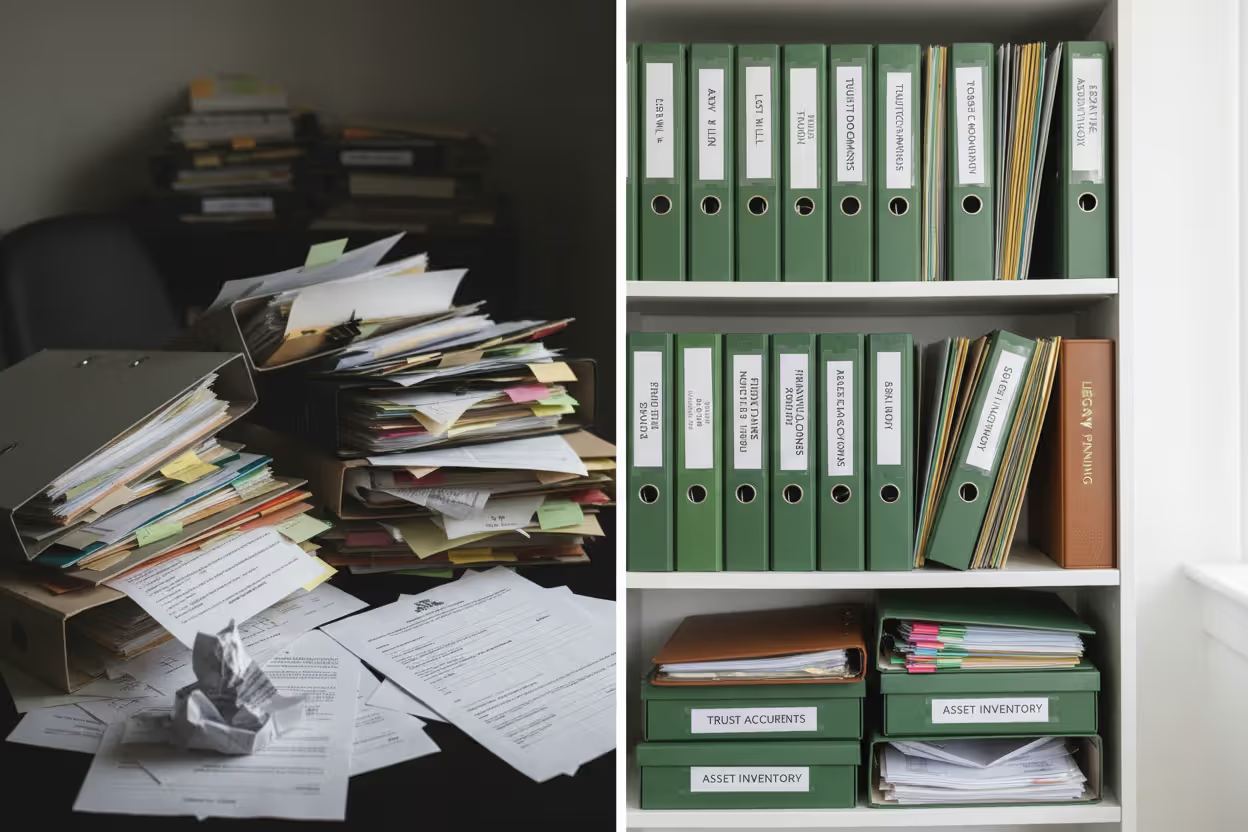
While working through the checklist, simultaneously build a master location reference. Each completed item gets an entry: "Will—original in fireproof safe, copy with attorney Sarah Chen, copy in digital files folder Estate Planning." When your executor needs to find something quickly, this reference proves invaluable.
Set automatic calendar reminders for annual checklist reviews. Also review immediately after major life shifts: getting married or divorced, having a baby, losing a family member named in your documents, receiving a large inheritance, selling a business, or moving to a new state where different laws apply. Estate planning documents gathering dust for a decade often contain information so outdated they cause more confusion than clarity.
Share your progress with someone who'll hold you accountable. Tell your spouse you'll finish the asset inventory by Friday. Update your adult daughter monthly on your checklist completion. Knowing someone will ask about your progress dramatically increases follow-through rates.
What to Include in Your Estate Planning Document Checklist
Standard legal documents only scratch the surface. Your estate planning checklist - pdf should dig deeper into categories people routinely forget.
Detail your assets beyond the obvious checking accounts and house. Own a valuable stamp collection? Antique furniture from your grandparents? A wine cellar you've been building for years? Specify these items and who should receive them. If you're a business owner, document your ownership structure, any buy-sell agreements, succession plans, and key person insurance policies.
Digital assets become more complicated every year. In 2026, the average person maintains dozens of online accounts: email, social media, cloud storage, streaming services, online banking, cryptocurrency exchanges, NFT collections, domain names for websites. List every account with usernames. Document how to access your password manager or where you've written down passwords. Some platforms have policies about account access after death—Facebook lets you name a legacy contact, Google has an inactive account manager. Set these up and note them on your checklist.
Document all insurance comprehensively, including long-term care policies that could protect your estate from catastrophic healthcare expenses. If you're carrying umbrella liability coverage, make sure your executor knows about it and can file claims if needed.
Spell out your funeral preferences in detail. Burial or cremation? If burial, which cemetery—have you purchased a plot already? Religious considerations? Preferred funeral home? Have you prepaid any services? What kind of memorial service do you want? Should donations go to a specific charity instead of flowers? This level of detail prevents family arguments when everyone's grieving.
Guardianship choices for minor children rank among your most important decisions. Name both first and backup choices, and actually have conversations with these people beforehand. Don't surprise your sister by naming her guardian in your will without asking if she's willing. Consider whether you want the same person raising your kids and managing their money, or if separate guardians for daily care versus financial matters makes more sense.
List every professional helping manage your affairs: your estate attorney's name and contact information, your CPA, financial advisor, insurance broker, business attorney, and anyone else who knows important details about your situation. Note what each person handles so your executor knows who to contact with specific questions.
If you have pets, they need a plan too. Who'll take your golden retriever or your parrot that might live another 30 years? Have you discussed this with them and do they agree? Consider setting aside money specifically for pet care—some people even create pet trusts with specific instructions about diet, veterinary care, and living conditions.
Document your charitable intentions even though they're not legally binding. If certain causes matter deeply to you—childhood cancer research, environmental conservation, your church—noting this helps family make memorial donation suggestions or estate distribution decisions that align with your values.
Author: Rebecca Langford;
Source: harbormall.net
Common Estate Planning Mistakes to Avoid
Creating estate planning documents then stashing them in a drawer for 15 years ranks among the most common mistakes. Your daughter was seven when you wrote your will—now she's 22 and graduated from college. Your retirement accounts have tripled in value. Tax laws have changed three times. That vacation cabin you mentioned has been sold for years. Meanwhile, your will still names your mother as executor, even though she passed away five years ago. Outdated documents create confusion at best, legal nightmares at worst.
Establishing a trust then never transferring assets into it wastes all the time and money you spent creating it. The trust document itself does nothing—you must retitle your house to the trust name, designate the trust as beneficiary on accounts, or transfer assets through other proper legal methods. Lawyers call this "funding the trust," and skipping this step means your carefully crafted trust sits empty and useless while all your assets go through probate anyway.
Beneficiary form neglect causes more inheritance disasters than you'd think. These simple forms—the ones you filled out in 10 seconds when opening your 401(k)—trump everything your will says about those accounts. People change these once and forget they exist. Result? Your retirement account with $800,000 still lists your ex-husband from 15 years ago while your current wife gets nothing from it.
Tax planning oversights can cost your heirs hundreds of thousands. Federal estate tax exemptions currently sit at high levels, but state estate taxes vary wildly—some states tax estates over $1 million. Retirement account distributions can push heirs into higher tax brackets. Generation-skipping transfers trigger additional taxes. What seems like smart planning in one state becomes a tax disaster if you retire somewhere else.
Choosing the wrong person as executor or trustee creates years of headaches. Your brother might be loyal and trustworthy but has never paid a bill on time in his life. Your best friend would be perfect except she lives in Tokyo and your estate needs someone local. The role requires financial competency, organizational skills, ability to handle family dynamics diplomatically, and willingness to dedicate serious time to administrative tasks. Choose poorly and your estate settlement drags on for years.
Family communication failures often lead to contested wills and hurt feelings. You don't have to reveal dollar amounts or every detail, but giving people a general heads-up prevents nasty surprises. If you're leaving your house to one child because they've been your caregiver while leaving other assets to your other kids, explain this while you're alive. Let people know where to find your important documents. Secrets breed suspicion and litigation.
Assuming estate planning is only for rich people leaves millions of families vulnerable. You might think "I only have $150,000 in assets, why bother?" But if you have kids under 18, you absolutely need to name guardians. If you own any property or accounts, you need to specify who gets them. If you want anyone other than your closest blood relatives to inherit anything, you need a will. Estate planning matters for nearly everyone, not just the wealthy.

Author: Rebecca Langford;
Source: harbormall.net
Where to Store Your Estate Planning Checklist and Documents
Finding the right storage balance is tricky. You need security against theft, loss, and damage, but documents locked away so securely that nobody can access them defeat the purpose.
Bank safe deposit boxes provide excellent physical security, but access can get complicated fast. Some states allow banks to seal boxes immediately upon the owner's death until proper legal authority is established. If you store documents there, make absolutely certain your executor knows the location and has legal authority to access the box. Consider safe deposit boxes better for secondary backup copies rather than the only copies of critical documents.
Expert Perspective on Estate Planning Organization
Over 15 years of practice, I've witnessed the difference between organized estates and chaotic ones.One client's family settled everything in six weeks because she'd maintained a detailed checklist with locations of every document. Another family spent 14 months tracking down accounts and policies because their father kept no records. The deceased person's organizational efforts—or lack of them—directly impact how much their family suffers during grief. That checklist isn't a bureaucratic exercise. It's your last gift of consideration to people you love
— Jennifer Martinez
A quality fireproof home safe offers convenient access with solid protection. Look for UL ratings—specifically, a safe rated for at least one hour at 1,700°F. Water resistance matters too, since firefighters will flood your house. Bolt the safe to floor joists or wall studs so thieves can't just carry it away. Give your executor the combination and exact location—"behind the winter coats in the basement closet."
Digital storage has evolved into a genuinely viable option for estate documents. Scan important papers and upload them to encrypted cloud storage with strong passwords and two-factor authentication. Specialized estate planning document services offer secure storage with controlled sharing features that grant your executor access upon your death. Never store sensitive documents in regular email folders or unencrypted cloud storage—that's asking for identity theft.
Your attorney typically maintains copies of documents they prepared. This provides professional backup storage and ensures at least one set of documents is safely preserved. But attorneys retire, relocate, and close practices. Don't rely solely on their copies—maintain your own as well.
Distribute specific copies strategically based on need-to-know. Your healthcare agent needs your healthcare directive and living will—they can't make medical decisions without proof of authority. Your financial power of attorney needs that specific document. Your executor should receive copies of everything, or minimally, detailed instructions about where originals are stored.
Create a simple one-page document location roadmap listing each important document and where to find it. Keep copies of this roadmap in multiple places: with your primary document storage, with your executor, in your digital files, and maybe with your attorney. Update it immediately whenever you change where something is stored.
Avoid storage locations that become inaccessible precisely when people need them. Don't keep your only will copy in a safe deposit box your executor can't open. Don't hide documents in some clever secret spot that nobody else knows about. The original deed to your house doesn't help your executor if they can't find it.
Estate Planning Document Types Comparison
| Document Name | Purpose | Who Needs It | When to Update |
| Last Will and Testament | Distributes assets, names executor, appoints guardians for minor children | Everyone who owns property or has minor children | Following major life changes like marriage or divorce; review minimum every 3-5 years |
| Revocable Living Trust | Bypasses probate process, maintains privacy, manages assets during incapacity | Those with substantial assets, complex family situations, or who want probate avoidance | When asset holdings change significantly; review every 3-5 years |
| Durable Power of Attorney | Grants authority for financial decision-making if you become unable to manage affairs | All adults, especially those with property or business interests | Every 5-7 years or when relationship with designated agent changes |
| Healthcare Directive | Names medical decision-maker and documents treatment preferences | Every adult regardless of age or health status | Every 5 years or whenever your medical preferences or trusted agent changes |
| Beneficiary Designations | Controls distribution of specific accounts outside the will process | Anyone holding retirement accounts, life insurance, or payable-on-death accounts | After marriage, divorce, births, deaths; review annually |
| Letter of Intent | Provides guidance, practical information, and context to executor and family | Particularly valuable for those with complex wishes or specific preferences | Annually or when your circumstances or wishes change |
FAQ
Protecting your family through comprehensive estate planning doesn't require a law degree or weeks of work. What it requires is organization, and that's exactly what your checklist provides.
Begin by downloading or building a checklist that addresses all the categories discussed here: legal documents, financial records, asset inventories, digital assets, and personal instructions. Print it out. This week—not someday, this actual week—schedule your first work session. Even finishing just three or four items creates momentum and delivers peace of mind.
Estate planning isn't a one-time project you complete and forget. Your initial effort builds the foundation, but regular updates keep your plan working as your life evolves. Set a recurring annual reminder to pull out your checklist and review whether anything needs updating.
The hours you spend organizing now will save your family hundreds of hours of stress during one of life's most difficult periods. Beyond logistics, you're ensuring your assets land where you want them, your children receive care consistent with your values, and your healthcare preferences are respected. A straightforward checklist makes all of this achievable.
Related Stories

Read more

Read more



The content on this website is provided for general informational and educational purposes only. It is intended to explain concepts related to estate planning, wills, trusts, tax strategies, and financial legacy planning.
All information on this website, including articles, guides, worksheets, and planning examples, is presented for general educational purposes. Estate planning situations may vary depending on personal circumstances, financial structures, legal regulations, and jurisdiction.
This website does not provide legal, financial, or tax advice, and the information presented should not be used as a substitute for consultation with qualified legal, tax, or financial professionals.
The website and its authors are not responsible for any errors or omissions, or for any outcomes resulting from decisions made based on the information provided on this website.