

Mature couple reviewing financial estate planning documents together at a home office desk with soft natural light
IRA Estate Planning Guide for Beneficiaries and Heirs

Most people have more money sitting in their retirement accounts than anywhere else—sometimes double what their house is worth—yet they'll spend weeks agonizing over who gets the family china while ignoring the paperwork that controls where a $600,000 IRA actually goes.
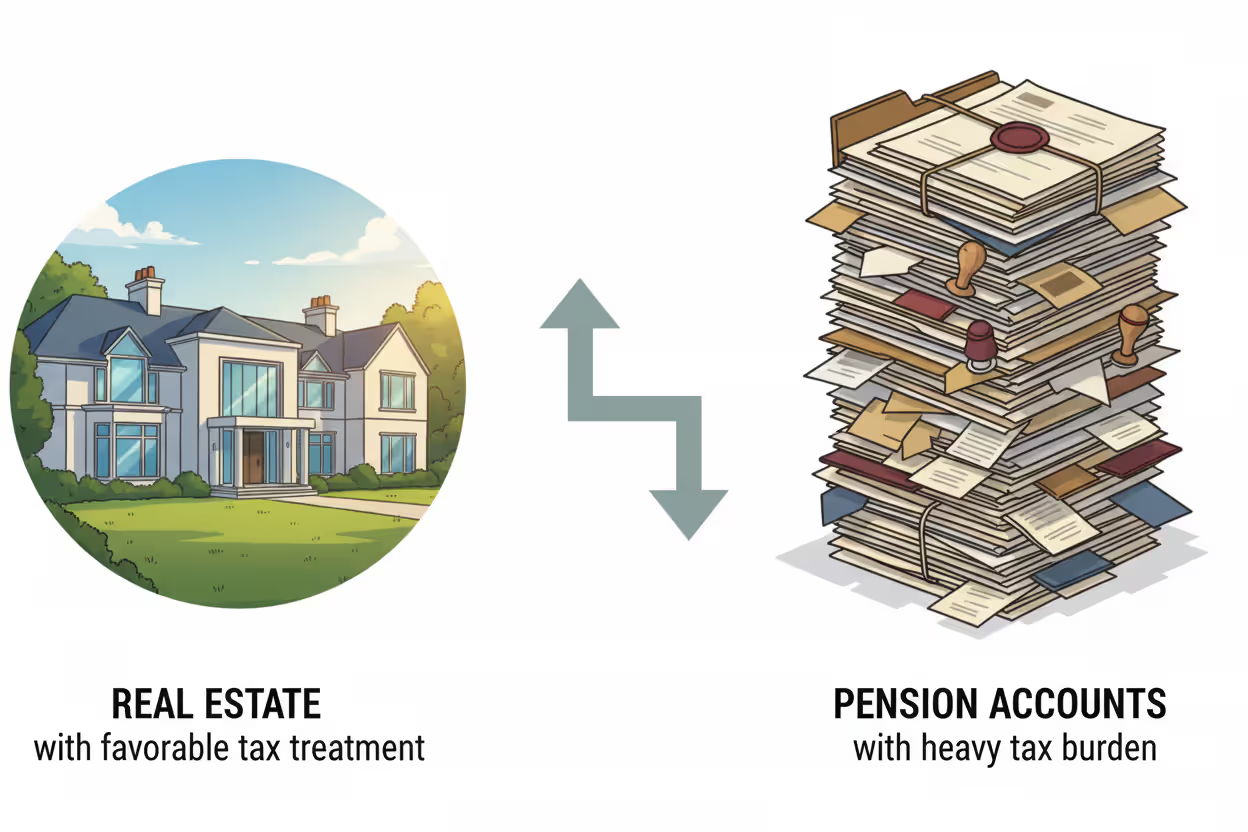
Here's what makes retirement account estate planning so different from planning for everything else you own: tax treatment. Your kids inherit your beach house? They get what's called a stepped-up basis, which wipes out all the capital gains that built up while you owned it. That $200,000 property you bought for $50,000? They can turn around and sell it tomorrow with zero capital gains tax.
IRAs work completely opposite. Every dollar that comes out of a traditional IRA gets taxed as regular income to whoever inherits it. No basis step-up. No special breaks.
Let's walk through what this looks like in real life. Say your son works as an engineer pulling in $140,000 a year. He's already paying 24% federal tax on his top dollars. Now he inherits your $400,000 traditional IRA. When he starts taking distributions, that money piles on top of his salary, shoving him straight into the 32% bracket—or higher depending on how much he withdraws. After federal and California state taxes hit him, he might hand over $150,000 to tax collectors. That's more than a third of what you spent decades building up.
There's another wrinkle most people miss entirely. Your will doesn't control what happens to retirement accounts. Not even a little bit. The beneficiary form you filled out at your brokerage firm—that's what matters. Everything flows according to that document, regardless of what your will or trust says.
This creates all kinds of problems. Maybe you divorced ten years ago, got remarried, had your attorney draft a beautiful new will leaving everything to your current spouse. But nobody remembered to change that old IRA beneficiary form from 1998. Guess who gets the money? Your ex. The courts consistently side with the beneficiary designation over what your will says.
Congress completely rewrote the rules back in 2019 with something called the SECURE Act. Before that, your daughter who inherited your IRA could take tiny distributions stretched across her whole lifetime—maybe 50 years of tax-deferred growth. Now? She's got ten years to drain the entire account. All that income gets compressed into a decade, frequently landing right when her career hits peak earnings and she needs extra taxable income least.
Smart ira estate planning means understanding these complications, making sure your paperwork actually matches what you want to happen, and using strategies that keep more money in your family instead of sending it to Washington.
Author: Caroline Ellsworth;
Source: harbormall.net
How to Choose and Update Your IRA Beneficiaries
Studies show more than a third of IRA owners haven't looked at their beneficiary forms in over five years. During those five years? Kids got married, grandchildren were born, that sister you named as backup moved to Portugal, your brother passed away. Life keeps moving while that form sits unchanged in a filing cabinet somewhere.
The structure here matters more than people realize. Primary beneficiaries come first—they get everything unless they die before you do or refuse the inheritance. Only then do contingent beneficiaries get anything. If you name your spouse as primary and nobody as contingent, then your spouse dies before you, your IRA ends up going to your estate by default. That triggers the absolute worst distribution timeline available and exposes the money to probate court.
Common mistakes in ira beneficiary estate planning pop up constantly. People write "my children" without listing actual names—then it's unclear whether that includes stepkids you helped raise or a child you later adopted. Others split things "equally among my three kids" without specifying what happens if one dies before you. Does that child's share go to their kids (your grandkids)? Or does it get divided between your two surviving children?
Never name minor children directly as beneficiaries. They legally can't manage inherited accounts until they turn 18 (or 21 in some states), which means courts get involved appointing guardians and supervisors. It's expensive and messy.
Set yourself a reminder to review beneficiary designations every two or three years minimum. After major life events, check them immediately: marriage, divorce, births, deaths, big changes in wealth, moving to a different state. Moves matter particularly if you're heading to or from community property states, where spouses have different automatic rights to retirement money.

Author: Caroline Ellsworth;
Source: harbormall.net
Spousal Beneficiary Options
Surviving spouses get privileges under ira transfer planning that nobody else receives. They can treat the inherited IRA as their own—basically absorbing it into their existing retirement accounts—or keep it separate as an inherited account. Which approach works better depends entirely on personal circumstances.
Taking ownership makes sense when the survivor is younger than the deceased spouse and doesn't need immediate cash. This delays required withdrawals until age 73, letting the money grow tax-deferred as long as legally possible. You can also name your own beneficiaries, setting up the next generation.
Keeping it as an inherited account helps younger widows and widowers who need access before turning 59½. Normally, withdrawals from your own IRA before that age get hit with a 10% penalty on top of regular income tax. Inherited IRAs skip that penalty no matter how young you are.
The ownership option also opens doors for Roth conversions—gradually moving money from tax-deferred to tax-free accounts, eliminating required distributions forever and potentially setting up tax-free inheritances for your kids.
Non-Spousal Beneficiary Rules
Your adult children and other non-spouse heirs face much tighter restrictions under current inherited ira estate plan regulations. The ten-year rule requires the entire account balance to be withdrawn by December 31st of the tenth year after you die.
The IRS threw everyone a curveball in 2022 with new interpretations: if you'd already started taking required distributions before dying, your beneficiaries have to take annual withdrawals during years one through nine, then clean out whatever's left by year ten. This blocks the strategy of leaving everything invested until the last possible moment.
Some beneficiary categories get better treatment. Surviving spouses, obviously. Also disabled or chronically ill people, minor children (until they hit adulthood), and anyone whose age falls within ten years of yours—either direction. These "eligible designated beneficiaries" can stretch distributions across their statistical life expectancy.
One catch with minor children: once they reach legal adulthood (18 or 21 depending on the situation and state), the ten-year clock starts ticking. That often creates serious tax pressure during early career years when they're climbing the income ladder.
Distribution Rules for Inherited IRAs
Getting ira distribution estate planning right protects your heirs from painful penalties and helps minimize what they pay in taxes. The right distribution schedule depends on several factors: the relationship to the deceased, whether required distributions had already started, and whether it's a traditional or Roth account.
For traditional IRAs inherited by non-spouses when the original owner had already begun mandatory withdrawals, the IRS now requires yearly distributions during that ten-year window. Beneficiaries calculate these using IRS life expectancy tables based on their age, preventing the "wait until year ten" approach.
Tax consequences swing wildly based on timing. Withdraw everything immediately? Your heir could face a tax bill eating up 40% or more of the inheritance as it launches them into top brackets. Spreading it evenly across ten years brings predictability but may not be optimal.
Smart beneficiaries map out their income for the next decade. Someone planning to sell their business in year three might take minimum IRA distributions that year to avoid stacking taxable events. Young professionals generally see income climb as careers develop—pulling larger distributions early while in lower brackets, then backing off as salary increases, often cuts total taxes.
Roth IRAs inherited by non-spouses still face the ten-year emptying requirement, but distributions come out tax-free. Best strategy? Usually leaving the Roth alone as long as possible, maximizing tax-free compounding, then taking the full balance in year ten.
Miss a required withdrawal? You'll pay 25% of what you should have taken—though that drops to 10% if you fix it within two years. Given evolving regulations and tricky calculations, paying for professional help often saves far more than it costs.

Author: Caroline Ellsworth;
Source: harbormall.net
Tax Strategies to Minimize IRA Estate Taxes
Strategic moves during your lifetime can dramatically shrink what your heirs eventually pay in taxes. Roth conversions sit at the top of the list for retirement account estate planning.
Converting traditional IRA money to Roth creates an immediate tax bill at your current rates. Writing that check stings, no question. But it eliminates all future required distributions for you and creates a tax-free asset for your kids. Despite the ten-year distribution requirement for inherited Roths, beneficiaries pay zero income tax on withdrawals.
Roth conversions make financial sense when you expect your heirs to face higher tax rates than you're paying now, or when you can cover the conversion taxes from savings outside your IRA rather than using retirement money itself. The sweet spot often hits during early retirement—after you've left your high-paying job but before Social Security and required distributions kick in. Your income drops temporarily and conversions cost less.
Qualified charitable distributions offer another powerful tool once you reach 70½. These direct transfers from your IRA to qualifying charities—up to $105,000 annually as of 2026—satisfy required distribution rules without increasing your adjusted gross income. You shrink the taxable IRA your heirs will eventually inherit while supporting causes you care about, all without needing to itemize deductions.
Charitable remainder trusts work for sophisticated planning in larger estates. Name a CRT as IRA beneficiary, and it receives the retirement assets, pays income to family members for a set period or their lifetimes, then sends what's left to charity. This works particularly well when you have major charitable goals and heirs who benefit from structured income instead of lump sums.
Some wealthy families intentionally point IRAs toward charities and leave other assets to children. Tax-exempt organizations receive the full IRA without paying income tax, while kids inherit appreciated stock that gets a stepped-up basis at death—wiping out capital gains on all the appreciation that happened during your life.
Life insurance adds another dimension. Using IRA distributions to fund premiums creates tax-free death benefits replacing the IRA's value for heirs, while letting you spend down or convert retirement accounts more aggressively without worrying about depleting inheritances.

Author: Caroline Ellsworth;
Source: harbormall.net
Common IRA Estate Planning Mistakes to Avoid
Outdated beneficiary forms top every estate lawyer's list of preventable disasters in ira beneficiary estate planning. Research suggests nearly 40% of retirement account owners haven't touched these forms in over five years—during which marriages ended, intended heirs died, and family situations transformed completely.
The divorced-and-remarried scenario happens with alarming frequency. Someone divorces, remarries, updates their will providing for the new spouse, but that IRA beneficiary form naming the ex gets forgotten. Since beneficiary designations override wills, the ex-spouse receives the entire retirement account regardless of obviously contrary intentions in the will.
Making your estate the IRA beneficiary—whether intentionally or by default when named beneficiaries predecease you—creates the worst distribution timeline possible. Estates can't use life-expectancy-based distributions. Instead, the IRA typically must distribute completely within five years if you died before required distributions started. IRAs flowing through estates also expose assets to creditor claims and probate expenses that direct beneficiary designations sidestep entirely.
Coordination failures between beneficiary forms and overall estate planning cause confusion and family fights. Maybe your trust documents establish a special needs trust providing for a disabled child without jeopardizing government assistance. But if you name that child directly on your IRA beneficiary form, those funds could disqualify them from means-tested benefits. The special needs trust itself should be listed as beneficiary.
Nine states follow community property rules—Arizona, California, Idaho, Louisiana, Nevada, New Mexico, Texas, Washington, and Wisconsin. In these jurisdictions, spouses hold automatic interests in retirement accounts earned during marriage. You might need written spousal consent before naming someone else as primary beneficiary.
The per capita versus per stirpes distinction controls what happens if a child dies before you. "My children, per capita" splits your IRA equally among surviving children only. If one child predeceased you, their kids (your grandchildren) get nothing—their parent's share redistributes among your other children. "My children, per stirpes" ensures a deceased child's portion flows to their own children, preventing accidental disinheritance.
Trust designation errors include naming trusts that don't meet IRS "see-through" requirements, which can speed up distribution schedules and worsen tax results. Proper trust language demands technical precision and should involve experienced legal counsel specializing in retirement accounts.
Working with Professionals on IRA Transfer Planning
The technical complexity of ira estate planning plus constantly changing regulations make professional guidance valuable for anyone with substantial retirement savings. The question becomes which professionals you need and how they should work together.
Estate planning attorneys build the foundation—wills, trusts, healthcare directives, powers of attorney—forming your comprehensive plan. They make sure IRA beneficiary designations mesh with these documents and can draft specialized trusts for receiving retirement assets when situations demand extra protection: young children, beneficiaries with disabilities, creditor threats, or blended families.
Financial advisors handle the number crunching—modeling Roth conversion scenarios under different tax assumptions, projecting distribution strategies minimizing lifetime tax liability, and helping decide when to tap retirement accounts versus other assets. CPAs tackle specific tax return preparation and advise on reporting IRA distributions, conversions, and inherited account requirements.
Complex situations need team collaboration: estates approaching federal estate tax thresholds (currently $13.99 million per individual in 2026), families with competing interests from multiple marriages, beneficiaries with special needs requiring careful government benefit protection, or business owners needing succession planning alongside retirement distribution.
IRA custodians—the financial institutions holding accounts—maintain their own procedural requirements and timelines. Each uses its own forms, some demand medallion signature guarantees for certain transactions, and processing speeds vary considerably. Beneficiaries should contact custodians immediately upon inheriting to learn specific requirements and deadlines. When a custodian proves difficult or uncooperative, transferring inherited IRAs to more responsive institutions is usually possible and often worthwhile.
Documentation for inherited IRA transfers typically includes an official death certificate, the beneficiary form on file with the institution, government-issued ID for all beneficiaries, and completed institution-specific paperwork. Assembling these materials quickly prevents delays establishing inherited accounts and meeting distribution deadlines.
Professional fees vary by location and complexity. Simple beneficiary form reviews might fall within existing advisory relationships at no extra charge. Comprehensive estate planning involving specialized trusts typically runs $2,000–$5,000 or higher for complex situations. Measured against potential tax savings—often tens or hundreds of thousands—appropriate professional help typically delivers enormous returns.
The biggest mistake I see is treating IRA beneficiary designations as an afterthought.Clients will agonize over dividing personal property—who gets grandmother's jewelry or the family photos—but then they'll complete a beneficiary form controlling a half-million-dollar IRA in under a minute without considering tax consequences or how it coordinates with their trust provisions. That single form often controls more wealth than everything mentioned in their will combined. It deserves careful thought and periodic professional review, particularly because the SECURE Act fundamentally changed the rules that governed planning for decades
— Jennifer Martinez
Frequently Asked Questions About IRA Estate Planning
IRAs demand specialized estate planning approaches because they operate under tax rules and distribution requirements fundamentally different from other assets you'll pass to heirs. The beneficiary designation form supersedes your will, making it among the most consequential documents in your estate plan—and paradoxically, one of the most frequently ignored.
Recent legislative changes eliminated many conventional planning approaches, making reviews of older strategies essential to confirm they still function under current law. The ten-year distribution mandate for most non-spouse beneficiaries compresses the traditional planning timeline, demanding more sophisticated analysis of when and how heirs should take withdrawals to minimize tax impact.
Effective approaches include routine beneficiary designation reviews following life changes, ensuring IRA beneficiary selections harmonize with broader estate documents, evaluating Roth conversions to reduce future tax burdens on heirs, implementing qualified charitable distributions when circumstances warrant, and properly structuring trusts when needed for protecting young children or addressing special situations.
The intricacy of these regulations and the substantial wealth typically involved justify professional collaboration for anyone holding significant retirement account balances. An integrated team—estate planning attorneys, financial advisors, and tax professionals—can architect a comprehensive approach that minimizes taxation, protects intended beneficiaries, and ensures your retirement savings transfer according to your actual wishes rather than default provisions that may completely contradict your intentions.
Begin by locating your current beneficiary designation forms, examining them for accuracy and alignment with your legacy objectives, and scheduling a thorough review with qualified professionals who understand both the technical requirements and your family's unique circumstances and goals.
Related Stories

Read more

Read more




The content on this website is provided for general informational and educational purposes only. It is intended to explain concepts related to estate planning, wills, trusts, tax strategies, and financial legacy planning.
All information on this website, including articles, guides, worksheets, and planning examples, is presented for general educational purposes. Estate planning situations may vary depending on personal circumstances, financial structures, legal regulations, and jurisdiction.
This website does not provide legal, financial, or tax advice, and the information presented should not be used as a substitute for consultation with qualified legal, tax, or financial professionals.
The website and its authors are not responsible for any errors or omissions, or for any outcomes resulting from decisions made based on the information provided on this website.